
The Galaxy Node will officially launch on September 21st, simultaneously commencing a new phase of Star Rank co-construction.
Sep 20, 2026
New York, United States, September 20, 2026 -- As the Web3 industry gradually shifts from competition based on single applications to multi-chain collaboration and ecosystem co-construction, how to form more efficient and reliable connections between users, communities, channels, and applications is becoming a crucial issue for industry development. On September 21, 2026, the Galaxy Orbit node system will officially launch, and the recruitment for co-construction will simultaneously enter a three-month phase. This launch signifies that Galaxy Orbit will move from infrastructure construction to node collaboration and ecosystem implementation, thus unfolding a distributed co-construction network for multi-chain applications.

Galaxy Orbit positions itself as a traffic aggregation and application incubation protocol for the Web3 multi-chain ecosystem. It continuously builds verifiable growth infrastructure around identity connectivity, intelligent routing, behavioral verification, data attribution, and risk collaboration. Addressing industry challenges such as fragmented entry points, disjointed user paths, and insufficient application connectivity, Galaxy Orbit aims to provide a unified collaboration framework that identifies user needs, allocates ecosystem resources, and ensures that every participation and collaboration has a clear path and traceable results.
The launch of the Galaxy Nodes marks a crucial step in this system's evolution from "protocol capabilities" to a "collaborative network." Within the overall architecture of the Galaxy Orbit, nodes are not merely single identifiers or isolated entry points for communication; rather, they are vital collaborative units connecting regional communities, ecosystem applications, content resources, and user feedback. Nodes will play a role in areas such as ecosystem awareness, application feedback, community services, regional connectivity, and scenario co-creation, helping the platform understand the real needs of different markets and establishing user-friendly communication channels for ecosystem applications.
The co-construction phase of the node system, launched concurrently with the node system, will proceed systematically over the next three months. Galaxy Orbit views this phase as a crucial window for early network development, gradually gathering core forces with a sense of responsibility and action, focusing on collaborative capabilities, content understanding, community service, and a long-term commitment to co-construction. Related arrangements will be released in stages based on different regions and ecosystem progress, adhering to the principles of steady openness, genuine participation, and long-term collaboration, prioritizing the sustainable value nodes bring to ecosystem development over short-term quantitative expansion.
"Star Rank" represents a participant's growth trajectory within the Galactic Orbital Collaboration Network, reflecting their accumulated responsibility in connection, co-creation, and service. As the node system continues to operate, participants can leverage their strengths in scenarios such as content dissemination, community collaboration, application feedback, event organization, and regional ecosystem connectivity. Every effective action becomes part of the network's growth, and every genuine collaboration provides a basis for application optimization and ecosystem expansion, driving node relationships from simple connections to stable collaboration.
At the technical and operational levels, Galaxy Orbit will provide fundamental support for node collaboration through core components such as Galaxy ID, Galaxy Router, Galaxy Proof, Galaxy Campaign, Data Attribution, and Risk & Ops. The identity system establishes clear participant relationships, intelligent routing helps efficiently match needs with applications, behavioral verification and data attribution record genuine contributions, and the risk and operations modules handle anomaly identification, rule management, and order maintenance. The coordinated operation of these multiple capabilities enables the node network to expand its connectivity while maintaining data clarity, path transparency, and process verifiability.
In the first phase of ecosystem development, Galaxy Orbit will focus on BOT Chain and its application constellations as key collaborative scenarios, exploring new user onboarding, application experience, themed events, and cross-application collaboration. Through nodes' awareness of regional needs and the platform's organization of user paths and feedback, more applications can gain optimization insights closer to the real market; users can also recognize different applications through clear pathways, reducing the experience costs caused by information fragmentation. Extending from a single entry point to an application constellation, and transforming one-time engagement into continuous connection, is a crucial direction for Galaxy Orbit's ecosystem collaboration.
This launch also signifies that Galaxy Orbit will further refine its node governance and risk boundaries. The platform will continue to emphasize openness and transparency, clear rules, and prudent participation, prioritizing data security, privacy protection, and compliance requirements across different regions. The platform will not endorse any unauthorized external promises, exaggerated claims, or misleading statements. Galaxy Orbit aims to establish a sustainable collaborative order, ensuring that node value stems from genuine services, effective connections, and long-term contributions, allowing ecosystem development to return to the products, users, and applications themselves.
From a longer-term perspective, the next stage of competition in the Web3 ecosystem will increasingly rely on cross-chain connectivity, user understanding, and verifiable collaborative efficiency. Technology determines how far a network can reach, while nodes determine whether an ecosystem can truly penetrate different markets, communities, and use cases. The launch of the Galaxy Node System will establish a more human connection between the protocol and the real world, and will also provide new fulcrums for application growth, regional collaboration, and global ecosystem expansion.
September 21st marks the official launch of the Galaxy Nodes and a new stage in the Galaxy Orbit co-construction network's journey towards large-scale collaboration. Over the next three months, the collaborative efforts of the Galaxy Orbit network will gradually converge, and the node system will be continuously calibrated and improved in real-world scenarios. The Galaxy Orbit will continue to focus on "traffic aggregation, application incubation, and verifiable growth" as its core path, connecting every valuable coordinate and aggregating every real action, allowing dispersed forces to synergize along a common track, and enabling more Web3 applications to grow in an open, trustworthy, and sustainable ecosystem.
Embarking on a journey along the orbit, connecting constellations, and witnessing growth.
Contact Info:
Name: zhao
Email: Send Email
Organization: GALAXY ORBIT
Website: https://www.galxe.com
Release ID: 89203832
In the event of encountering any errors, concerns, or inconsistencies within the content shared in this press release, we kindly request that you immediately contact us at [email protected] (it is important to note that this email is the authorized channel for such matters, sending multiple emails to multiple addresses does not necessarily help expedite your request). Our dedicated team will be readily accessible to address your feedback within 8 hours and take appropriate measures to rectify any identified issues or facilitate press release takedowns. Ensuring accuracy and reliability are central to our commitment.
More News
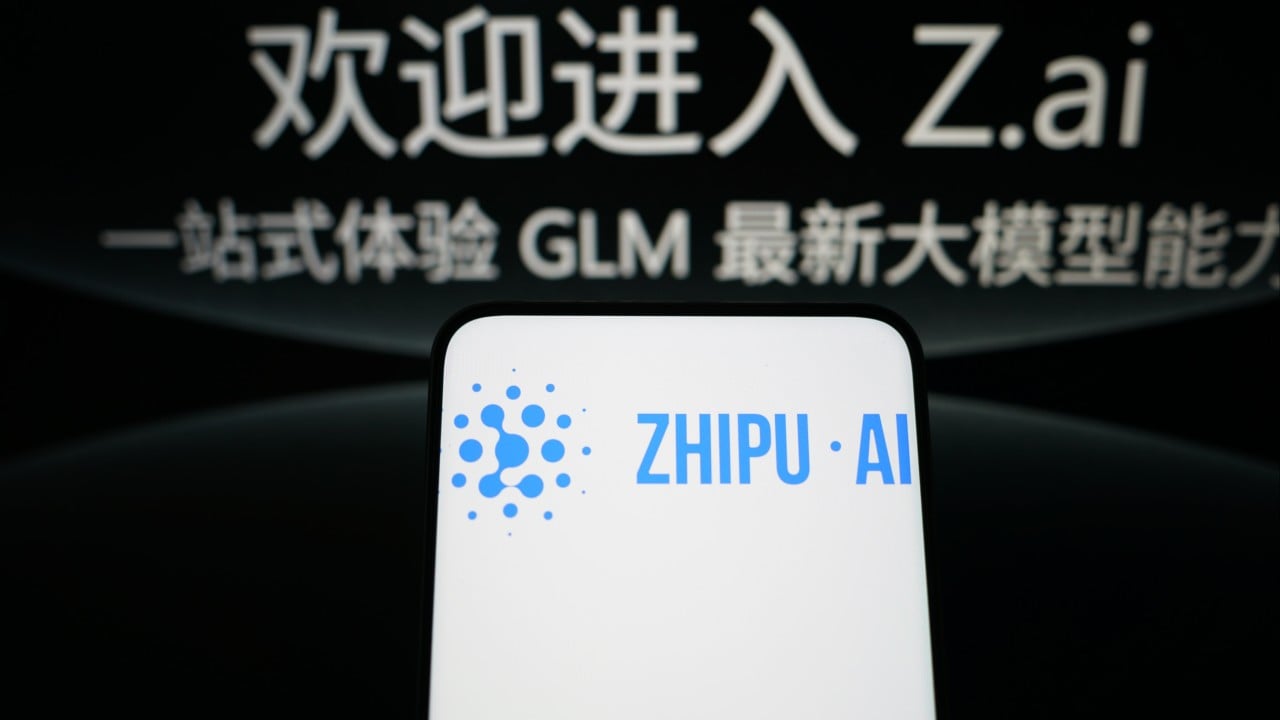
Chinese AI firm Z.ai faces reputation hit after users spot unauthorised uploads
Chinese artificial intelligence company Z.ai is facing a trust crisis after developers discovered that its coding assistant tool, ZCode, was silently uploading local workspace data to external servers without explicit user consent. Even though the company, also known as Zhipu AI, apologised and patched the vulnerability, developers said the incident was likely to weaken its reputation, especially at a time when cybersecurity is becoming a central issue in the AI industry. The issue came to light...

New North Korea-Russia bridge delivers a powerful message to China
The recent opening of a new road bridge between North Korea and Russia may look like a modest infrastructure project. In reality, the 1km stretch across the Tumen River carries implications far beyond the movement of vehicles between two border towns. For China, it is a reminder that its influence over North Korea is no longer as secure as it once appeared and that Russia may be increasingly capable of challenging Beijing’s interests on its northeastern periphery. The bridge, inaugurated on...

North Korea fires 2 missiles in 3 hours amid tensions over US drills
North Korea fired two missiles off its eastern coast on Sunday, its second set of tests in roughly a week and days after Pyongyang accused the US of driving tensions on the Korean peninsula through a series of military drills. Nearly three hours after launching a short-range ballistic missile (SRBM) towards the East Sea, or Sea of Japan, on Sunday afternoon, North Korea fired a similar missile, according to South Korea’s defence ministry. If the subsequent launch is confirmed to be a ballistic...

An Unused and Divisive Philippine Nuclear Plant Awaits Its Fate
The government is exploring nuclear power options to guard against global energy shocks. One proposal is to switch on a plant in Bataan that has been mothballed for 40 years.

China’s CXMT touts new chip manufacturing platform as close to ‘world’s most advanced’
Chinese memory chip giant Changxin Memory Technologies (CXMT) said on Sunday that it adopted its new-generation technology platform for mass production, narrowing the advantage of global leaders including Samsung Electronics and SK Hynix in manufacturing nodes. CXMT’s fifth-generation technology platform, dubbed G5, achieved a “quantum leap” in storage density, with the number of dies produced per wafer increasing by at least 50 per cent from the previous generation while maintaining better...

Middle powers don’t have to wait for a Trump-Xi-Putin summit
The prospect of United States, Chinese and Russian leaders meeting at the Asia-Pacific Economic Cooperation (Apec) summit in Shenzhen this November has revived the Yalta analogy. Talk of a Trump-Xi-Putin summit – echoing the 1945 meeting that reshaped the world – surfaced during the first Trump term, and speculation returned last year with the 80th anniversary of the second world war. No such meeting occurred. However, Chinese President Xi Jinping hosted the two presidents back-to-back in...
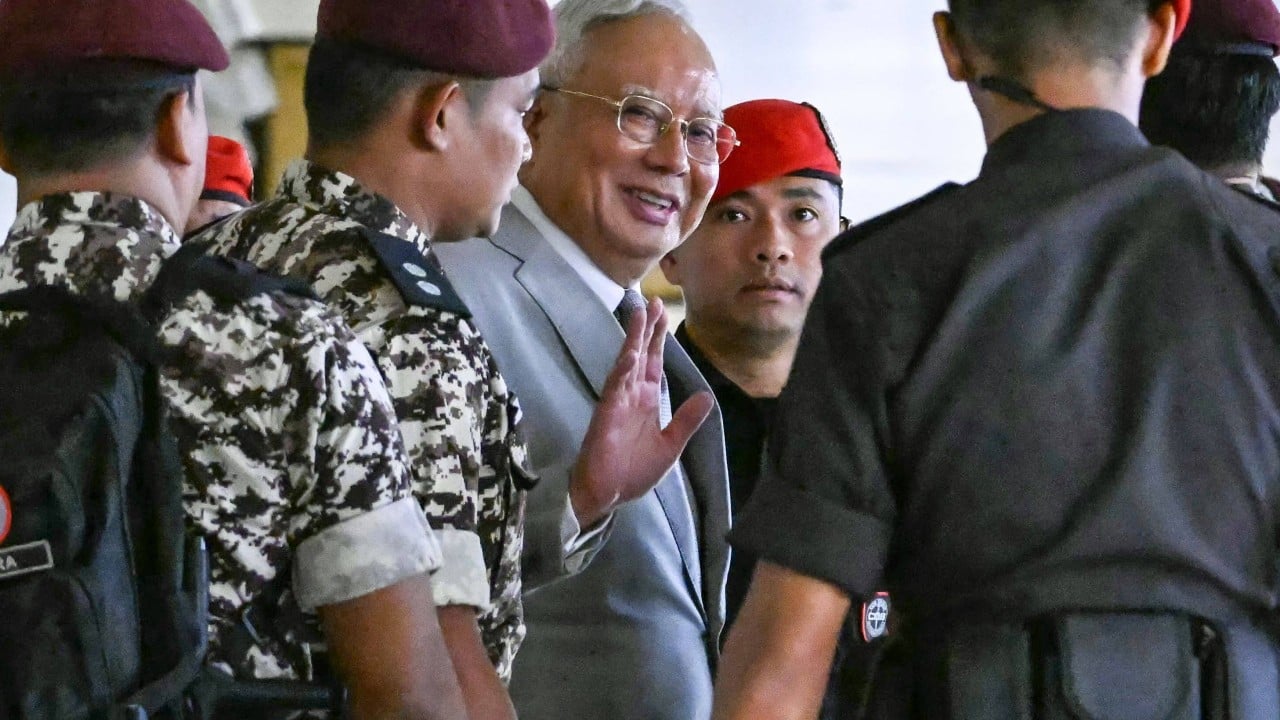
Pending US$12.3 million house arrest fine keeps Malaysia’s Najib in prison
Former Malaysian prime minister Najib Razak said on Sunday that he would remain in Kajang Prison as he and his legal team study the conditions attached to his “conditional pardon”, including the payment of a 50 million ringgit (US$12.3 million) fine before he can be transferred to house arrest. In a statement issued on his behalf by Messrs Shafee & Co, Najib said his transfer to house arrest depended on the conditions of the pardon being fulfilled. “Until the fine is paid to the court, our...

A Diplomat From Myanmar Refuses to Give Up New York City Post
For more than five years, U Kyaw Moe Tun has refused to give up his United Nations post and a sandstone townhouse on the Upper East Side.

The cooling trap: how Asia’s air conditioners are making heatwaves worse
As heatwaves become more frequent and intense across Asia, the region faces a dangerous power paradox. Soaring demand for air conditioning threatens to push electricity grids closer to failure just as extreme heat puts the infrastructure under greater strain, raising the risk of cooling disappearing when people need it most. That risk has been visible across the region this summer. In South Korea, President Lee Jae Myung called a record heatwave a “national disaster” in August after the death...

Anwar was on song in India. Will Malaysia reap the rewards?
Malaysia’s Prime Minister Anwar Ibrahim caused a bit of a stir in India recently with his spirited rendition of a Bollywood classic – a lighthearted moment that also neatly captured his broader push to deepen ties with the South Asian giant. A video of Anwar singing, from memory, Kishore Kumar’s 1965 hit ballad “Khwab Ho Tum Ya Koi Haqeeqat” (“Are you a dream or are you reality?”) was first posted to his social media accounts last Sunday before quickly being picked up by Indian news outlets. The...
Why AI giants are choosing Singapore to turn models into real-world tools
When Jordan Seow joined OpenAI in June 2025, he became the company’s first locally hired forward-deployed engineer in Asia-Pacific, joining a Singapore office that then had fewer than 20 employees. The 29-year-old is now part of a fast-growing workforce built in Singapore by the world’s leading artificial intelligence companies. Experts say the city state is emerging as a regional hub – not for training the latest AI models, but for the increasingly crucial task of deploying and adapting them...

Named as an enemy: Indonesia’s uneasy Aukus moment
A former Australian official’s use of a hypothetical “aggressive Indonesia” to make the case for Aukus at a public inquiry has been called “clumsy diplomacy” by analysts, who say the comments risk reviving old suspicions as Jakarta and Canberra try to strengthen security ties. Michael Pezzullo, a former deputy secretary of strategy in Australia’s defence department, made the remarks in testimony on September 2 to the Aukus Public Inquiry, an independent, crowdfunded review of the trilateral...
YOUR NEWS, OUR NETWORK.
Do you have Great News you want to tell the world?
Be it updates about your business or your community, you can make sure that it’s heard by submitting your story to our network reaching hundreds of news sites across 6 verticals.