
Kingway as a China Leading Photochromic Lenses Factory: Single Vision, Bifocal, and Progressive Range
Sep 18, 2026
Danyang, Jiangsu Sep 17, 2026 (Issuewire.com) - Selecting the correct China Leading Photochromic Lenses Factory configurations requires wholesale buyers to separate the light-responsive function from the underlying optical geometry. When distributors treat "photochromic" as a single standalone product category, they risk misaligning their inventory with the precise refractive and multifocal requirements of their optical retail clients. Zhenjiang Kingway Optical Co., Ltd. gives distributors a design-led assortment that can be further separated by index, color, and photochromic treatment. Kingway provides an assortment-planning route through the photochromic lens category, spanning single-vision products, flat-top bifocals, progressive lenses, and higher-index spin photochromic options. For wholesale assortment planning, establishing the physical optical design is the first useful way to prevent very different products from being grouped under one generic label.
Photochromic Assortment Planning Starts with Optical Design
Photochromic describes a light-responsive function, while single vision, bifocal, and progressive describe the optical design used to distribute prescription power. These are different specification layers and must remain separate in a B2B product matrix. When chain-store procurement teams build their catalogues, treating light-responsive behavior as an additive feature rather than a base design ensures a more logical inventory structure. This approach prevents confusion on the manufacturing floor and guarantees that stock orders align precisely with clinical dispensing needs.
A distributor or Rx laboratory can therefore begin with the visual design required by the market and then add index, color, coating, and quantity requirements. This sequence produces a cleaner assortment than starting from the word "photochromic" alone, ensuring that the procurement process addresses the structural foundation before addressing the light-changing behavior. Organizing the matrix in this way allows technical managers to evaluate the base geometry--such as aspherical profiles or specific multifocal segments--before confirming the photochromic performance. By standardizing this workflow, optical importers can streamline their RFQ processes and minimize errors during bulk replenishment.
Single-Vision Photochromic Routes Create the Broadest Entry Family
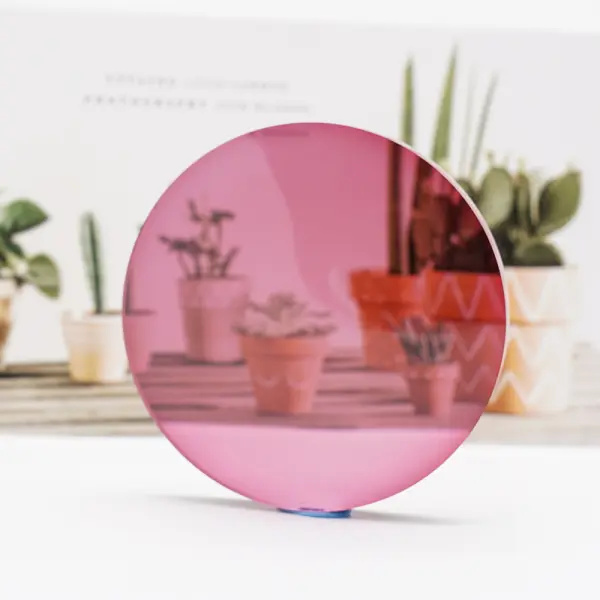
Kingway's single-vision photochromic range includes 1.56 Photo Pink, Photo Green, and Photogray variants. Single vision creates the simplest optical-design branch while allowing color and photochromic treatment to vary within it. Because single-vision lenses represent the highest-volume segment of most optical assortments, securing a reliable supply of light-responsive options in this category is essential for chain stores and wholesale distributors. The ability to offer varied photochromic colors, rather than relying exclusively on standard gray or brown, allows retail optical shops to capture a broader demographic of fashion-conscious eyewear consumers.
For wholesale buyers, the single-vision route is best organized by refractive index and color after the physical design has been fixed. That keeps a 1.56 colored photochromic item distinct from a higher-index spin photochromic product. By mapping the single-vision portfolio carefully, procurement teams can define precise requirements for Anti-Reflective (AR), Hard Multi-Coating (HMC), or Hard Coating (HC) applications alongside the photochromic baseline. As an established manufacturer since 2011, Kingway produces finished and semi-finished lens families in China, ensuring that single vision, flat-top, round-top, blended-top, and progressive designs are clearly organized within its wider portfolio. With a 5,000-square-meter facility and a daily output reaching 20,000 pairs, the factory supports scalable single-vision replenishment and reliable lead times for volume importers.
Bifocal Photochromic Designs Add a Segmented Multifocal Option
The photochromic range includes a 1.56 flat-top Photogray route, adding a bifocal segment structure to the light-responsive assortment. This combines photochromic function with a defined multifocal geometry rather than treating it as a new material category. For end users who require distinct near and distance vision zones without the visual adaptation period sometimes associated with progressive lenses, the flat-top design provides a visible, high-contrast segment. Adding photochromic capabilities extends this utility into outdoor environments, providing continuous UV protection and glare reduction without requiring patients to switch to separate prescription sunglasses.
Bifocal sourcing should therefore name the segment design, photochromic requirement, index or material, coating, and prescription fields separately. This prevents the light-changing function from obscuring the bifocal architecture underneath it, allowing chain stores and procurement teams to accurately specify the required multifocal performance. When importers submit their order lists, separating the 1.56 flat-top specification from the Photogray treatment ensures that the manufacturing floor processes the correct blank and applies the appropriate light-responsive technology. This operational clarity is particularly important when managing semi-finished blanks destined for secondary Rx laboratory surfacing.
Progressive Photochromic Lenses Add a No-Line Multifocal Route
Kingway's range also includes a 1.56 progressive Photogray product, extending the photochromic family into progressive multifocal use. Progressive photochromic selection adds corridor and fitting considerations that do not apply in the same way to single-vision products. Because a progressive lens features a continuous, seamless transition from distance to intermediate and near vision, the physical corridor length and the base curve must align meticulously with the wearer's frame selection and visual habits. Attempting to source progressive lenses based solely on their photochromic properties ignores these critical geometric parameters.
This makes the progressive branch more dependent on prescription and frame inputs, often requiring careful channel selection based on frame height, Addition (ADD) power, and previous wearer experience. Distributors serving prescription centers should keep design and fitting requirements visible when photochromic progressive products move from assortment planning into individual Rx orders. Whether managing bulk stock inventory or coordinating custom FreeForm progressive processing workflows, buyers must verify that the selected progressive corridor can accommodate the photochromic function without compromising the visual transition zones. Proper alignment between the progressive design and the photochromic layer ensures consistent performance across all viewing distances.
Index and Color Variants Add a Second Assortment Layer
After optical design is chosen, index and color create the next useful filters for the supply chain. Kingway's photochromic range includes 1.56 colored and Photogray routes alongside 1.61 and 1.67 Spin Photogray products. Higher-index materials offer thinner, lighter profiles for stronger prescriptions, making the spin photochromic technology particularly valuable for advanced Rx applications. By utilizing spin coating techniques for high-index materials, manufacturers can achieve rapid, uniform darkening and fading regardless of the lens thickness, resolving the performance discrepancies sometimes seen with traditional in-mass photochromic manufacturing.
A practical buyer matrix should keep each field independent so distributors can trace a lens from optical design to the exact commercial configuration. The assortment can separate the physical optical design (single vision, bifocal, or progressive), the refractive-index route (1.56, 1.61, or 1.67 where offered), the photochromic color or treatment (such as gray, pink, or green), and the specific coating and prescription requirements for the selected SKU.
This hierarchy gives wholesale buyers a consistent way to expand a photochromic assortment while keeping each index, color, and design tied to an actual product route, simplifying the transition from catalogue planning to quotation and replenishment. By structuring the RFQ around these layered specifications, importers can streamline their communication with the factory and ensure accurate Free on Board (FOB) or Cost and Freight (CFR) trade terms based on precise manufacturing requirements. Furthermore, this clarity supports the integration of customized OEM envelopes, allowing distributors to receive fully branded, retail-ready inventory directly from the production line.
Photochromic Lens Sourcing FAQ for Importers and Distributors
These questions keep the photochromic function connected to the underlying optical design, ensuring that procurement teams manage their inventory effectively.
Does Photochromic Describe the Lens Design?
No. Photochromic describes a light-responsive function, while single vision, bifocal, and progressive describe how optical power is organized across the physical geometry of the lens.
Which Photochromic Designs Are in Kingway's Range?
Kingway's range includes single-vision, flat-top bifocal, and progressive photochromic products, while the broader company portfolio also includes round-top and blended-top photochromic structures.
Are Higher-Index Photochromic Products Part of the Portfolio?
Yes. Kingway's range includes 1.61 and 1.67 Spin Photogray routes in addition to the standard 1.56 photochromic products, supporting stronger prescriptions with thinner profiles.
Can Buyers Assume Every Color Exists in Every Index and Design?
No. Color, index, and optical design should be matched to the specific product route being ordered rather than treated as universally interchangeable across the entire manufacturing catalogue.
What Belongs in a Photochromic Wholesale RFQ?
State the optical design, index or material, photochromic color or treatment, prescription or stock requirement, coating, quantity, and specific packaging needs such as OEM customized envelopes.
Build a China Leading Photochromic Lenses Factory Range Around Design, Index, and Color
A wholesale photochromic sourcing program becomes significantly easier to manage when the assortment is built in logical layers: optical design first, followed by index, color, coating, and commercial packaging requirements. This systemic approach gives the photochromic lenses factory range a reliable, scalable structure that distributors can use for both long-term catalogue planning and immediate RFQs. By organizing inventory from single-vision basics through specialized multifocal options, procurement teams can secure exact matching configurations while leveraging Kingway's capability for customized envelopes, steady lead times, and consistent daily output.
Send the required photochromic matrix through the https://www.kingway-optical.com/ to match the assortment with specific product routes, request accurate quotes, and streamline your next bulk wholesale order.

Source :Zhenjiang Kingway Optical Co., Ltd.
This article was originally published by IssueWire. Read the original article here.
More News

Torrential rain in Vietnam leaves 3 dead, 16,000 homes flooded
Heavy rains triggered flooding and landslides across northern Vietnam, killing three people and damaging thousands of homes as well as more than 22,000 hectares (54,000 acres) of crops. The northern region has experienced downpours since Monday, with some areas receiving as much as 653mm (26 inches) of rain, according to a statement on the government’s website. More than 16,000 houses have been inundated while rice and other crops have been damaged. National and provincial roads have been...

Thailand’s Muslim separatists vow to fight for independence ‘until the end of time’
Two decades into an insurgency that has killed thousands in southern Thailand, a leader of the main Malay–Muslim separatist group has vowed to keep fighting until it achieves its goals. “This struggle will continue until the end of time,” Nikmatullah Seri, the spokesman for the Barisan Revolusi Nasional (BRN) peace negotiation delegation, said in a rare interview. “As long as our objectives remain unachieved, we will continue to fight.” Militants from BRN have fought for an independent Islamic...

China to see major shift to Huawei for AI model training in 2027: rotating chair
Huawei Technologies expects a major domestic shift towards its artificial intelligence computing infrastructure for model training next year, as its Ascend processors gain ground on Nvidia in China despite supply constraints, according to rotating chairman Eric Xu Zhijun. “I believe that starting from next year, a lot of the AI model training will be based on the SuperPoD or SuperCluster based on Ascend 950DT,” Xu told reporters during the Huawei Connect 2026 conference in Shanghai on...

Rejecting Trump, South Korean Leader Says He Will Not Send Troops to Iran
President Lee Jae Myung’s comments followed President Trump’s repeated demand for “a little hand” from South Korea, a decades-old American ally.

Malaysia’s Najib Razak granted house arrest by Pardons Board
Malaysia’s Pardons Board on Friday agreed to allow disgraced former prime minister Najib Razak to serve out the remainder of his jail term under house arrest. King Sultan Ibrahim Iskandar granted Najib a “conditional pardon”, where the former leader is required to settle his 50 million ringgit (US$12.3 million) fine before he can be transferred to his home to complete his sentence. “He must abide by these conditions, and should he fail to fulfil any of these conditions, his conditional pardon...

Bail out or downsize? Malaysia’s stark choice as AirAsia losses mount
Malaysia could struggle to preserve some domestic air links if low-cost carrier AirAsia is forced to scale back operations, analysts have warned, as rival airlines would have little commercial incentive to take over unprofitable routes. That reality could leave the government facing a stark choice: allow domestic flight services to shrink or step in with subsidies for essential routes, rather than assuming competitors will automatically fill any void left by the country’s largest budget...

China Stockpiled Oil, and Now It Could Dominate the Energy Landscape
The war with Iran revealed just how much influence the world’s biggest oil importer has over prices and other countries’ supplies of jet fuel, gasoline and diesel.

Japan Raises Interest Rates to 31-Year High Under U.S. Pressure
The Bank of Japan’s widely expected move followed an unusual campaign by Treasury Secretary Scott Bessent for tighter monetary policy.

Trump Moves Ahead With F-35 Jet Sales to Saudi Arabia Despite Intelligence Concerns
U.S. intelligence agencies have warned in internal reports that China could acquire or steal U.S. warplane technology if F-35 jets are sent to Saudi Arabia.

US firm Waymo to launch robotaxi service in Singapore in 2028
Waymo plans to launch its robotaxi service in Singapore in 2028, giving the US company its first foothold in Southeast Asia. Fully electric Jaguar I-Pace vehicles were due to arrive in the city state in the coming months, ahead of preparations for a commercial launch, the company said on Friday. From 2027, trained autonomous specialists will manually drive the vehicles to help Waymo adapt its technology to Singapore’s road layouts, monsoon conditions and other local features. The service is...

Filipino fishers count the cost of South China Sea dispute
For fishermen like Joey Marabe in the Philippine province of Zambales, the geopolitical contest playing out in the South China Sea can be measured in dwindling catches and shrinking incomes, as the presence of Chinese vessels around a contested shoal increasingly limits where they can work. “It’s a huge drop. Before, a lot of us who could go out to Scarborough Shoal used to bring home around 15,000 pesos (US$238) a week, a comfortable amount for our families,” said Marabe, a resident of Masinloc...

Australia’s Sydney Airport staff shortages prompt plan to close tower overnight
Australia’s major airlines have backed a proposal to close Sydney Airport’s control tower overnight to free up air traffic controllers, the latest step to address a persistent labour shortage that is disrupting flights and raising safety concerns. “It sounds like an opportunity we should absolutely explore,” said Stephen Beckett, chief executive officer of Airlines for Australia & New Zealand, the group that represents Qantas Airways, its low-cost carrier Jetstar, and Virgin Australia Holdings....
YOUR NEWS, OUR NETWORK.
Do you have Great News you want to tell the world?
Be it updates about your business or your community, you can make sure that it’s heard by submitting your story to our network reaching hundreds of news sites across 6 verticals.