
Japan’s Labor Paradox: It Wants the Workers, Not the Immigrants?
Oct 26, 2026
Japan’s foreign resident population has grown to 4.28 million, and the number of foreign workers has also hit a record high; in an official survey, nine in ten respondents said they were satisfied with life in Japan. Renewal fees are rising, however, and the Business Manager and permanent residency screenings carry new requirements. For those hoping to make Japan their long-term home, everyday life and work, and whether they can build a secure future there, are two different challenges.
TOKYO, JAPAN (MERXWIRE) – Japan’s Immigration Services Agency (ISA) announced on October 16 that as of the end of June 2026, foreign residents totaled 4,281,026 — up 155,631, or 3.8%, from the end of 2025 and another all-time high. Of these, 4,017,321 were mid- to long-term residents and 263,705 were special permanent residents. Employment is at record levels too: by Ministry of Health, Labour and Welfare count, foreign workers numbered 2,571,037 as of the end of October 2025, up 11.7% year on year and the highest since the employer notification system began in 2007. And in an official questionnaire, 91.0% of foreign residents said they were satisfied with life in Japan.
Even as the population grows, employment hits records, and nine in ten report being satisfied with life, the bars for renewing one’s status and staying long-term are being raised: fees for changes of status of residence and extensions of the period of stay, and for permanent residency applications, were sharply increased as of October 1, and the permanent residency screening guidelines have been revised, with the new requirements taking effect in phases. The permanent residency application fee rose from 10,000 yen to 200,000 yen.
A Taiwanese resident of Japan who holds a “Business Manager” (keieikanri) status of residence said in an interview: “This round of changes is really noticeable. The screening criteria for visas have become stricter, the required costs have increased a great deal, and there is the question of whether renewal will be possible down the line. For people coming from overseas to run a company in Japan, this definitely creates considerable uncertainty.”
For foreigners already living in Japan, obtaining a status of residence, renewing it, and moving on to permanent residency are separate hurdles. The “becoming a resident of Japan” of this article’s title refers to the changes and difficulties that foreigners face when they seek a status of residence — or a longer-term, more stable standing beyond their current status, above all the life built around permanent residency.
Where the Unease Comes From: Stricter Screening, Higher Fees
The “Business Manager” status held by the interviewee opening this article has been governed by new standards since October 16, 2025: the capital requirement was raised from 5 million yen to 30 million yen, and new conditions were added — business management experience (three years or more, or a relevant master’s, doctoral, or professional degree), at least one full-time employee, Japanese at B2 or above for the applicant or a full-time employee, and a new business plan verified by experts. Transitional measures for renewals by existing holders run through October 16, 2028; by the official explanation, even after the transition period ends, permission will not be denied across the board solely for insufficient capital, and applications will continue to be assessed comprehensively on a case-by-case basis.
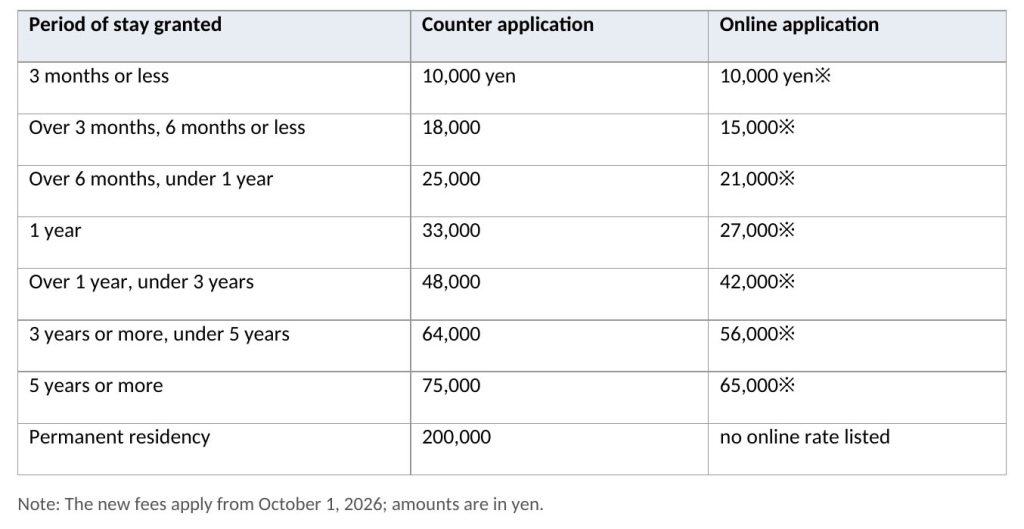
Renewal costs have risen sharply as well. As of October 1, 2026, fees for changes of status of residence and extensions of the period of stay were restructured from a flat 6,000 yen at the counter (5,500 yen online) to pricing by the period of stay granted. A one-year renewal, for example, now costs 33,000 yen at the counter, up from 6,000; a three-year renewal costs 64,000 yen. The permanent residency application fee was raised from 10,000 yen to 200,000 yen, payable upon approval. The new fees apply to applications filed and permitted on or after October 1, 2026; applications accepted on or before September 30 remain under the old fees even if the permit is issued on or after October 1. In late September 2026 hundreds of people queued at the Tokyo Regional Immigration Services Bureau, hoping to complete their paperwork before the higher fees took effect.
A Growing Population, Record Employment, Nine in Ten Satisfied
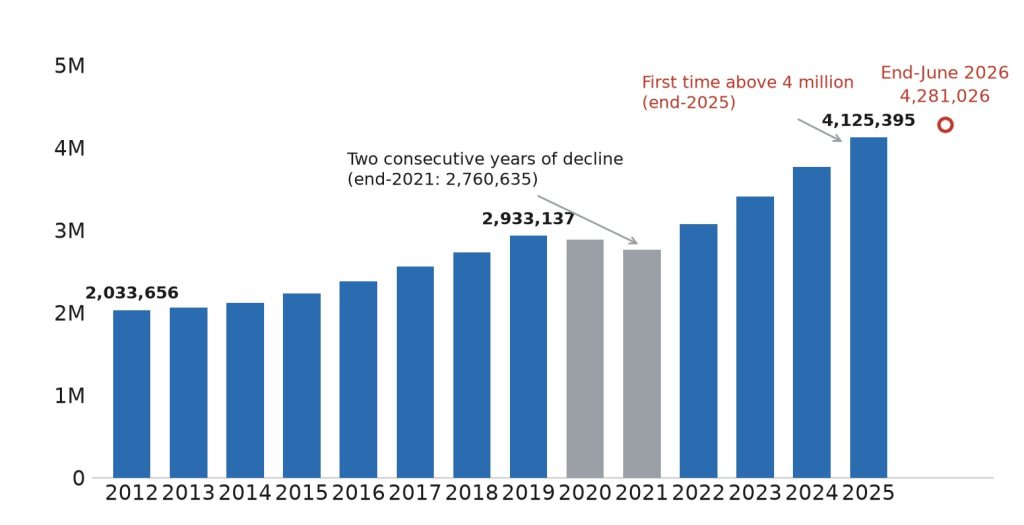
The bar is rising, but people are still coming. On year-end figures, the foreign resident population stood at 2,033,656 in 2012 and rose every year thereafter, with only two consecutive years of decline in 2020 and 2021 and growth resuming in 2022: 3,768,977 at the end of 2024 and 4,125,395 at the end of 2025 — the first time above 4 million, roughly double the 2012 level. Converted against the Ministry of Internal Affairs and Communications’ population estimates (October 1 values), foreign residents were about 3.35% of the total population at the end of 2025. The 4,281,026 of end-June 2026 is the latest reading in the series.
By nationality and region, the largest group at the end of June 2026 was China (941,031), followed by Vietnam (693,750), South Korea (408,682), the Philippines (362,761), and Nepal (334,850). Against the end of 2025, the three biggest increases in the top ten were Indonesia (+41,387), Nepal (+33,858), and Myanmar (+29,035); Brazil fell by 464, the only decline in the top ten; Taiwan ranked tenth with 73,628.
They are highly concentrated. Tokyo has the most, 824,486, or 19.3% of the national total — nearly one foreign resident in five lives in Tokyo; next are Osaka Prefecture (389,846), Aichi Prefecture (369,849), Kanagawa Prefecture (331,515), and Saitama Prefecture (305,867).
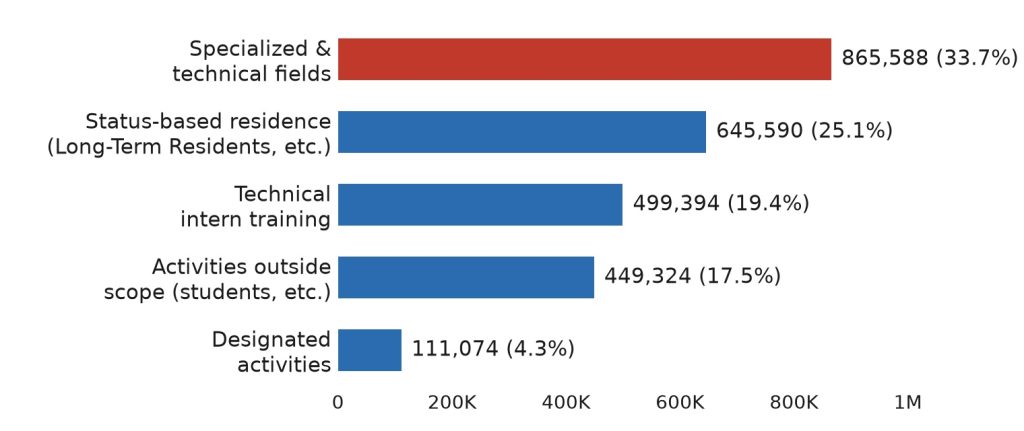
A large share are workers. The Ministry of Health, Labour and Welfare’s employer notification statistics show 2,571,037 foreign workers as of the end of October 2025; the 371,215 establishments reporting foreign employees was likewise the highest since the system began. By status of residence, workers in “specialized and technical fields” were the largest group at 865,588 (33.7%), up 20.4% from the previous year; they were followed by “status-based residence” (long-term residents and others), “technical intern training,” and “activities outside the scope of status” (mainly students).
By industry, manufacturing had the largest share at 24.7%; the fastest growth was in medical and welfare services, up 25.6% year on year. By nationality, Vietnamese workers were the most numerous (605,906, or 23.6%), followed by Chinese and Filipinos — a different ranking from the resident statistics, where China leads.
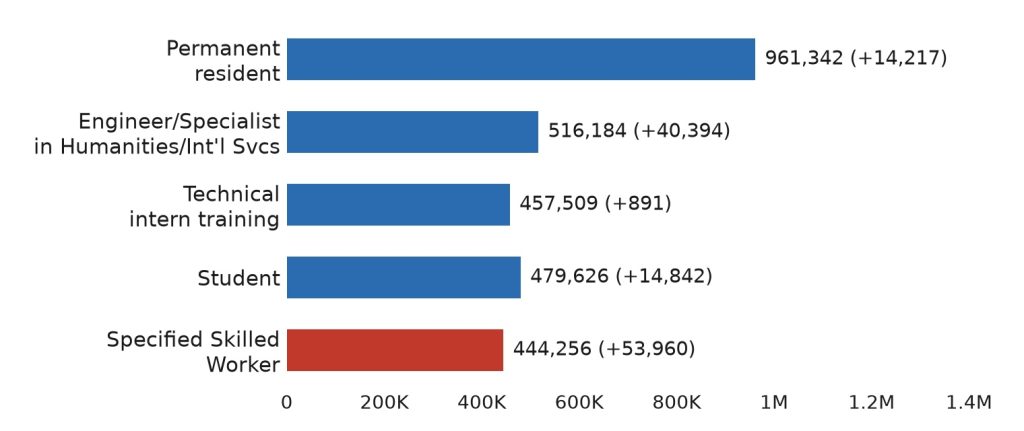
The mix of statuses is shifting as well. As of the end of June 2026, “permanent residents” were the largest status at 961,342; second through fifth were “Engineer/Specialist in Humanities/International Services” (516,184), “student” (479,626), “technical intern training” (457,509), and “Specified Skilled Worker” (444,256). Against the end of 2025, “Specified Skilled Worker” grew by 53,960, the largest gain in the top five, while “technical intern training” grew by only 891, nearly flat.
The Specified Skilled Worker program has two categories: No. 2, for workers with proficient skills, has no cap on renewals, allows family members to accompany the worker, and its years of residence count toward permanent residency applications. Category 2 is growing faster: 18,295 as of the end of June 2026, up 130% from the end of 2025 — about 2.3 times; Category 1 stood at 425,961, up 11.4%; both are preliminary figures.
Beyond the population and employment trends, satisfaction with daily life has risen too. The 2025 “Survey on Foreign Residents” found that 91.0% of respondents were satisfied with life in Japan (“satisfied” 52.8%, “somewhat satisfied” 38.2%), up 2.8 percentage points from the previous year’s survey. Among the satisfied (8,080 respondents), the top three reasons were the living environment (38.1%), social culture and customs that suit them (18.0%), and good public safety (10.7%); counts and percentages are in the full report. Among the dissatisfied (639), the top three reasons were high prices (32.7%), low wages (21.8%), and discrimination against foreigners (15.3%); in the previous year’s survey “low wages” had ranked first, and this time “high prices” moved to the top.
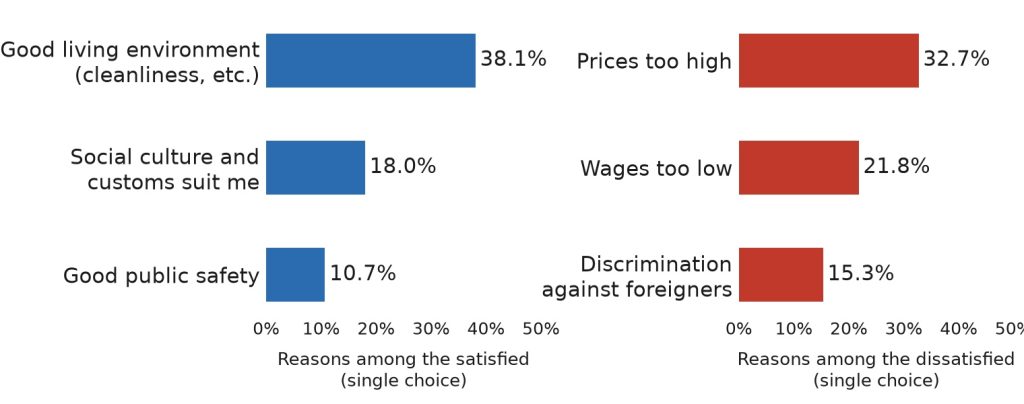
Satisfaction aside, the everyday difficulties are concrete. The survey asked about ten categories of daily troubles one by one: 52.8% said they had none. Among the specific troubles, consultations about finding work or a path to further education ranked highest (22.1%), with financial help when in difficulty (19.4%) and guarantors when renting (19.3%) close behind; a respondent could report multiple troubles, and each percentage uses all 8,874 respondents as the denominator. When consulting public offices, “not knowing which office to ask” and “having to take time off work or school to consult” tied as most common (16.6% each); that question allowed multiple answers, with all 8,874 as the denominator.
On language, 86.9% of respondents had studied Japanese; among those currently studying (3,194), the most common difficulties were “lesson fees are high” (16.6%) and “no free classes nearby” (16.4%); that question also allowed multiple answers. One timeline caveat: the survey was conducted in October and November 2025, so measures announced or implemented in 2026 cannot be used to explain respondents’ answers at the time; the satisfaction question was single-choice for all 8,874, and the reasons for satisfaction and dissatisfaction were asked only of the satisfied and the dissatisfied respectively, also single-choice.
Permanent Residency and Renewals Get Harder: Higher Fees and Thresholds
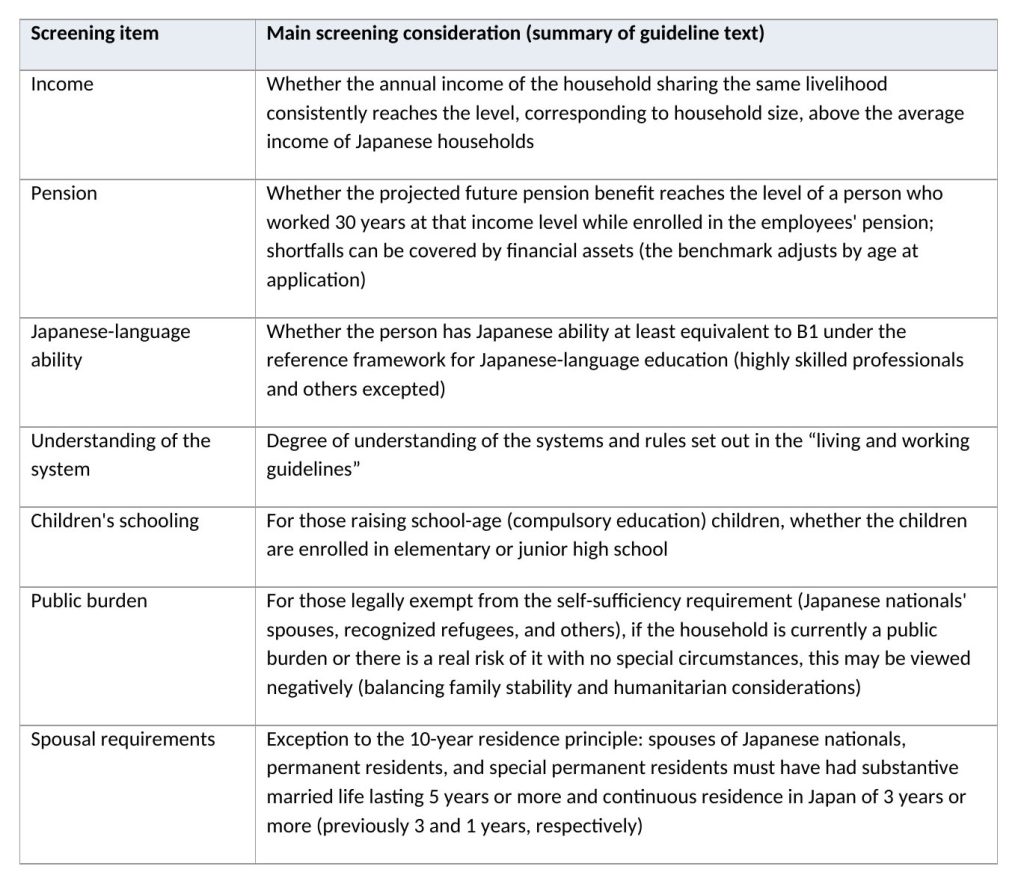
Beyond renewals, for foreigners seeking a more stable standing there is the permanent residency hurdle. On August 4, 2026, the ISA announced revisions to the “Guidelines for Permission for Permanent Residency,” formally revised on October 1, 2026. The items now reviewed range from income to pensions to spousal requirements (a full summary is in the tables at the end): whether the annual income of the household sharing the same livelihood consistently reaches the level, corresponding to household size, above the average income of Japanese households; whether the projected future pension benefit reaches the level of someone who worked 30 years at that income level while enrolled in the employees’ pension, with any shortfall covered by financial assets; whether Japanese ability is at least equivalent to B1 under the reference framework for Japanese-language education (highly skilled professionals and others excepted); and for the spousal exception to the 10-year residence principle, the requirement of substantive married life was raised from 3 to 5 years, and continuous residence in Japan from 1 to 3 years. The household income calculation carries further restrictions: for example, income of those on statuses not defined as work statuses under the guidelines, such as “dependent,” is not counted, while dependents living abroad still count toward household size.
The then-Minister of Justice said at a press conference on July 3, 2026 that with foreign residents continuing to increase, the costs of administering the system had risen accordingly, and “it is necessary to ask foreign residents to bear an appropriate share of the burden”. These policies sit with different authorities and rest on different legal bases. Analyzed by institutional impact, some foreign residents may face additional checks or costs across work, status renewals, taxes and social insurance, and permanent residency applications. And who these changes ultimately fall on was answered in so many words by the Taiwanese interviewee at the start of this article: for people coming to Japan to run a company, it “definitely creates considerable uncertainty.”
More News

‘Pull Out the Sick Trees’: Xi’s Constant Purges Pave Way for Next Term
The Chinese leader Xi Jinping, who is likely preparing to secure a fourth term in power in 2027, has complained that officials cannot be trusted.
Singapore’s toxic haze probe expands to 10 palm oil, forestry firms
Singapore has expanded its investigation into haze-creating fires in Indonesia that have blanketed the city state in smog, requesting information from 10 locally registered companies. The National Environment Agency (NEA) sent notices seeking documents and details of land concessions in Indonesia owned by the firms, their firefighting and blaze prevention measures, and their relationship to other relevant companies, according to a Friday statement. All 10 Singapore-registered companies were...
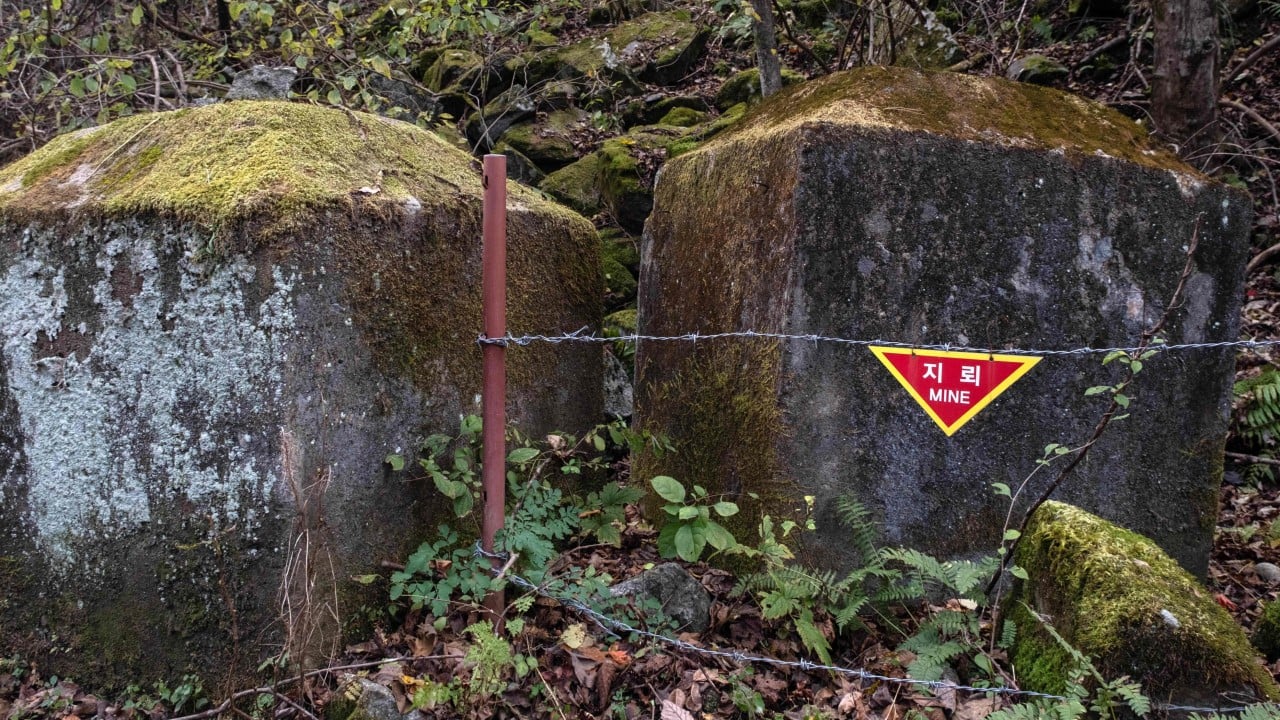
North Korea tells UN South ‘fabricated’ border landmine blast
North Korea sent a letter to the United Nations Security Council accusing Seoul of fabricating a landmine explosion that injured three South Korean soldiers, its state media reported Monday. Tensions between the two Koreas have soared since the South last month blamed the blast inside the heavily fortified demilitarised zone that separates the countries on landmines laid by the North, an accusation it has fiercely rejected. The North Korean permanent representative to the UN sent a letter on...

South Korean CEO’s 4-year jail term over plant fire that killed 23 spurs anger
“How can South Korea’s law be this weak? Twenty-three people died!” Those were the words of Chinese mother Li Shun-ji after South Korea’s Supreme Court upheld a reduced four-year prison sentence for Aricell CEO Park Soon-kwan last Tuesday over a 2024 factory fire that killed 23 workers, including Li’s then-24-year-old daughter, Yan Jing-jing. The blaze at the lithium battery manufacturer’s factory in Hwaseong, Gyeonggi province, killed 17 Chinese nationals, one Laotian national and five South...

Philippines plan ‘appropriate legal action’ against Thomas Markle
Philippine police are investigating a laptop found alongside images of child abuse at the former home of Meghan Markle’s estranged father, with “full results” expected in a week, the country’s interior minister told reporters. Thomas Markle, whose daughter is married to Britain’s Prince Harry, had been living in Cebu in the Philippines until reportedly returning to the US earlier this year. Philippine interior minister Jonvic Remulla said the country planned to take “appropriate legal actions”...

US Marine indictment in Okinawa murder trial renews anti-base movement
Prosecutors indicted a 20-year-old US Marine on Sunday on suspicion of robbing and murdering a woman in Okinawa earlier this month as the case renews anti-base sentiment among locals burdened with hosting the bulk of US military installations in Japan. Devin Ballard, who is stationed at Futenma Air Base, is charged with killing the woman by wrapping a phone cord around her neck at a hotel in Naha, the capital of the southern island prefecture, and taking her backpack containing a wallet on...

East Asia’s cultural economies are bridging politics-driven divides
The appearance of K-pop singer G-Dragon on electronic billboards in major Chinese cities despite Beijing’s K-pop ban points at a contrast between political shadows clouding international relations and actual commercial linkages in East Asia. Amid tensions over Seoul’s military alliance with the United States and other issues, G-Dragon featured in eight McDonald’s products across more than 8,000 outlets in mainland China. The penetration and appeal of Korean cultural icons show how transnational...

Filipinos split on Marcos’ South China Sea handling amid row over Jing Quan’s remarks
Filipinos are almost evenly divided over the Marcos administration’s handling of the maritime dispute with China, even as nearly three in four favour diplomacy over confrontation, according to a new survey. That preference has taken on added significance after recent remarks by China’s ambassador to Manila sparked a diplomatic row ahead of November’s Asean summit. The feud underscored the challenge of managing tensions with Beijing, and increasingly hostile rhetoric could make the diplomatic...
China’s tech giants are paying 1 million yuan for a new kind of AI engineer
Chinese technology giants are dangling annual pay packages approaching 1 million yuan (US$149,739) to attract artificial intelligence engineers who can turn AI models into commercial applications. Companies including ByteDance, Tencent Holdings and Alibaba Group Holding are stepping up recruitment and training of the so-called forward-deployed engineers (FDEs), who work directly with customers to develop and integrate AI applications into business operations. Demand for such professionals has...

Malaysian-owned tanker carrying US$14 million in ketamine seized in Indonesia
The tanker detained by Indonesian authorities that was used in an attempt to smuggle 1.16 tonnes of ketamine is owned by a Malaysian-registered company. Bukit Aman Narcotics Crime Investigation Department director Hussein Omar Khan said the two directors of the company that owns the MT Global 168 are Malaysians. He said the company’s office is located in Johor Bahru, Malaysia’s Johor state. According to Hussein, the tanker had previously applied for registration under the Malaysian flag but had...

Novel idea: Thailand, Vietnam take books on the road in reading drive
Tran Dai Thang spotted two young people who had picked up their drinks at a pop-up cafe beside his travelling bookstore and were about to leave, so he called them over. One of them said they did not read books, Thang recalled. But he kept the conversation going and eventually persuaded the visitor to buy a book for 10,000 dong (US$0.40) – heavily discounted from its original price of 45,000 dong. For Thang, an artist and publisher, the small sale mattered far less than the fact that someone who...
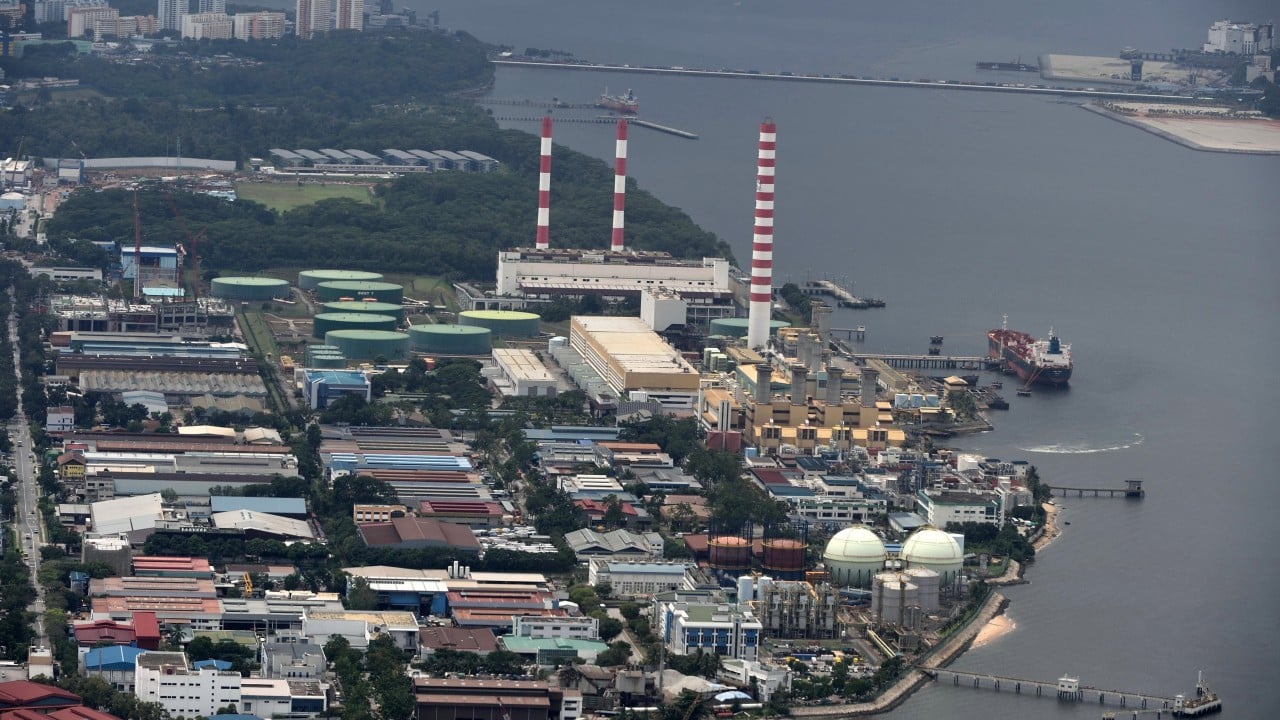
Singapore tells suppliers to ‘honour commitments’ amid Indonesia’s gas cut
Singapore expects all parties who have signed commercial contracts for gas supplies to “honour their commitments”, said Prime Minister Lawrence Wong on Sunday after Indonesia cut its exports. Speaking at the People’s Action Party (PAP) convention, Wong added that Singapore’s gas importer will take the necessary steps to protect its rights and interests. Indonesia began reducing natural gas exports to Singapore on Saturday. Indonesia’s upstream oil and gas regulator SKK Migas said the move was to...
YOUR NEWS, OUR NETWORK.
Do you have Great News you want to tell the world?
Be it updates about your business or your community, you can make sure that it’s heard by submitting your story to our network reaching hundreds of news sites across 6 verticals.