
Flexitank Manufacturer Guide 2026: Market Growth, Standards, and What Buyers Should Verify
Oct 28, 2026
Qingdao, Shandong, China, October 28, 2026 -- Flexitank supplier selection in 2026 requires verifying standards evidence, cargo compatibility, container condition, and route-specific approvals—not just capacity and price.
According to Fortune Business Insights, the global flexitank market was valued at USD 951.31 million in 2025 and is projected to grow from USD 1.076 billion in 2026 to USD 3.204 billion by 2034, a CAGR of 14.62%. Asia-Pacific accounted for a reported 39.25% of the market in 2025. These are the research firm's estimates; forecasts can differ by methodology and scope.
For buyers, growth is only part of the story. Supplier qualification requires a clearer understanding of the standards, testing arrangements, and operational controls relevant to each shipment. A 2026 supplier guide from LAF Technology outlines six dimensions: quality systems and traceability, cargo compatibility, capacity and filling limits, container suitability and installation, transport-mode and route requirements, and technical support and lifecycle management.
Why Flexitank Compliance Requires Careful Verification
Three frameworks are particularly relevant when buyers assess flexitank systems: the UNECE CTU Code, the Container Owners Association (COA) Code of Practice, and PAS 1008:2016.
The UNECE Code of Practice for Packing of Cargo Transport Units (CTU Code) is a non-mandatory global code of practice developed jointly by the International Maritime Organization, the International Labour Organization, and UNECE. It provides guidance for safe cargo-unit packing and handling, including considerations relevant to liquids transported in flexitanks. The code addresses cargo compatibility, container preparation, and the transport of dangerous goods in flexitanks.
The CTU Code is an important safety reference, but it is not a stand-alone flexitank product certification.
The COA Code of Practice for Flexitank Container Systems (TG-07) sets out practices and responsibilities across the flexitank supply chain. The COA also maintains a Flexitank Quality List (FQL) associated with its COA Quality Conformance (CQC) scheme.
A supplier's name appearing in a directory is not sufficient evidence on its own. Buyers should check the current FQL and confirm that the relevant status covers the actual manufacturer or operator, product design, and production site associated with the proposed shipment. The FQL records CQC status; buyers should not assume that a separate CQC certificate is issued as a standalone document.
PAS 1008:2016, titled Specification for the performance and testing of a single-use flexitank, addresses material properties, valve leak tightness, product information, and resistance to rail impact. The specified rail-impact resistance is defined in terms of a 2g acceleration or retardation force. This makes the standard relevant when evaluating flexitank testing evidence for intermodal transport.
The key distinction is between a general claim of compliance and evidence that applies to the specific product and production site. A management-system certificate alone does not establish that every flexitank design has passed every relevant product or transport test.
Six Criteria for Evaluating Flexitank Manufacturers
A structured supplier evaluation helps procurement teams compare proposals more consistently.
1. Quality systems and traceability. Ask how raw materials, film production, valves, fittings, assembly, and finished-product inspection are controlled. Clarify whether batch identification is available and how quality deviations are documented.
2. Cargo compatibility. A film that appears chemically resistant is not automatically suitable for every liquid. Density, viscosity, loading temperature, purity requirements, and regulatory classification can all affect the suitability of a specific flexitank configuration.
3. Capacity and filling limits. Nominal volume is not a loading instruction. Cargo density, allowable cargo mass, container payload, carrier rules, and product design determine the permissible loading quantity. A larger nominal capacity does not mean the same volume can be loaded on every route.
4. Container suitability and installation. Container condition is part of the safety system. Structural damage, contamination, moisture, floor defects, protruding nails, and sharp edges can compromise a flexitank before transport begins. Buyers should confirm inspection, preparation, lining where required, and installation procedures.
5. Transport-mode and route requirements. Ocean, road, and rail transport can involve different requirements. Rail-related test reports, approvals, and carrier acceptance should be verified for the specific product configuration and intended route, rather than inferred from a general certification claim.
6. Technical support and lifecycle management. Installation guidance, loading and discharge advice, incident escalation, and used-flexitank handling can affect operational risk. Because conventional flexitanks are designed for single-use transport, buyers should also ask about collection and recycling options available along the intended route.
A Manufacturer's Perspective: What Buyers Should Verify
LAF Technology is among the representative participants in the global flexitank industry.LAF Technology's official flexitank product page lists CRCC (China) and AAR (USA) among its transport-related references, along with ISO 9001, ISO 14001, ISO 14067, FSSC 22000, FDA, EU 10/2011, KOSHER, and HALAL. These references do not all represent the same type of certification or approval. Buyers should confirm the current supporting documentation, the certified entity or tested product, the production site covered, and relevance to the intended cargo and destination market.
LAF describes its involvement in COA industry standards and CRCC rail transport standards. Buyers should request supporting documentation rather than treating corporate statements as independent verification.
LAF's published capacity range is 14,000–26,000 litres for 20-foot flexitanks and up to 28,000 litres for 40-foot configurations. These are manufacturer-published specifications, not universal loading limits. LAF also publishes a temperature range of -40°C to +120°C across its product offerings; this does not mean every model can be filled, operated, or transported throughout that entire range. Obtain written confirmation of the specific model's permitted filling temperature and operating conditions before loading.
What This Means for Buyers in 2026
Market growth is creating more supplier options, but an incompatible cargo, unsuitable container, or unverified transport approval can expose shippers to costs that outweigh a small difference in unit price.
A practical procurement checklist should include:
- Current COA/FQL status, where applicable, and confirmation of the relevant manufacturer, product design, and production site.
- Cargo-compatibility information and food-contact documentation covering the intended application and destination market, where relevant.
- Product test reports and rail-related evidence appropriate to the planned route.
- Documentation describing manufacturing controls and material traceability.
- Written confirmation of loading quantity, temperature limits, installation requirements, and operating procedures.
- Defined arrangements for technical support, incident escalation, and used-product handling.
Buyers should also distinguish manufacturers from operators, distributors, and logistics service providers. These companies may perform different roles in the supply chain, and a service provider should not automatically be treated as the manufacturer of the product being supplied.
Ultimately, the most effective approach is not to rely on a generic "best flexitank manufacturer" ranking. It is to establish a documented evaluation process and verify the evidence relevant to each shipment.
In flexitank procurement, a verifiable compliance record and a product configuration suited to the cargo and route are more useful than an unsupported ranking or broad performance claim.
Sources
- Fortune Business Insights — Flexitank Market Size, Share, Trends and Forecast
- UNECE — Code of Practice for Packing of Cargo Transport Units (CTU Code)
- LAF Technology — Official Flexitank Product Information
Contact Info:
Name: Catherine Zhou
Email: Send Email
Organization: LAF Technology Co., Ltd.
Website: https://www.laftechnology.com/
Release ID: 89207587
In case of identifying any errors, concerns, or inconsistencies within the content shared in this press release that necessitate action or if you require assistance with a press release takedown, we strongly urge you to notify us promptly by contacting [email protected] (it is important to note that this email is the authorized channel for such matters, sending multiple emails to multiple addresses does not necessarily help expedite your request). Our expert team is committed to addressing your concerns within 8 hours by taking necessary actions diligently to rectify any identified issues or supporting you with the removal process. Delivering accurate and reliable information remains our top priority.
More News
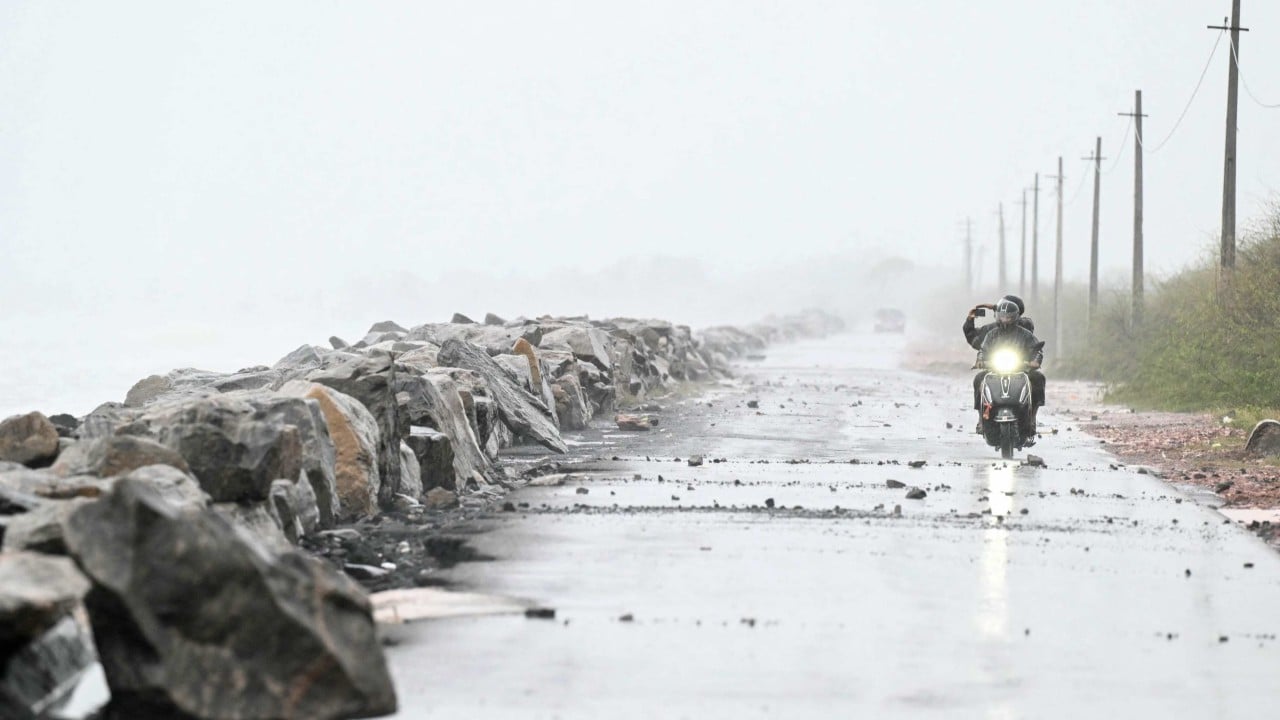
100,000 evacuated in India as Cyclone Arnab makes landfall on southeast coast
Ferocious winds and torrential rain lashed India’s southeastern coast as Cyclone Arnab made landfall on Wednesday, forcing nearly 100,000 people to evacuate their homes in two states, authorities said. Arnab hit Andhra Pradesh as a “very severe cyclonic storm”, with winds of 125-135km/h (78-84 mph) and gusts reaching 150km/h, the India Meteorological Department (IMD) said. A storm surge of 1.5 to 2.5 metres (5-8 feet) above normal tide is very likely to inundate low-lying areas of the state...

Why Indian-American support for Trump is slipping before midterms
Immigration restrictions, rising living costs and strains in US-India relations are testing support for President Donald Trump among some Indian-Americans who backed the Republican Party in 2024, analysts say, ahead of November’s midterm elections. A survey released in August by AAPI Data and Asian and Pacific Islander American Vote found that 66 per cent of Indian-American respondents favoured Democratic candidates for the US House of Representatives, compared with 18 per cent for Republicans....

Manila speaks with 2 voices on China
Manila sent two strikingly different messages to Beijing on October 13. At the Malacanang Palace, a presidential spokeswoman reaffirmed Manila’s commitment to sustaining diplomatic and economic ties with China, saying “China needs the Philippines, and the Philippines needs China”. That same day, Philippine Defence Secretary Gilberto Teodoro Jnr rejected a call for military-to-military communication with China, a move that received public support from the Armed Forces of the Philippines. Teodoro...
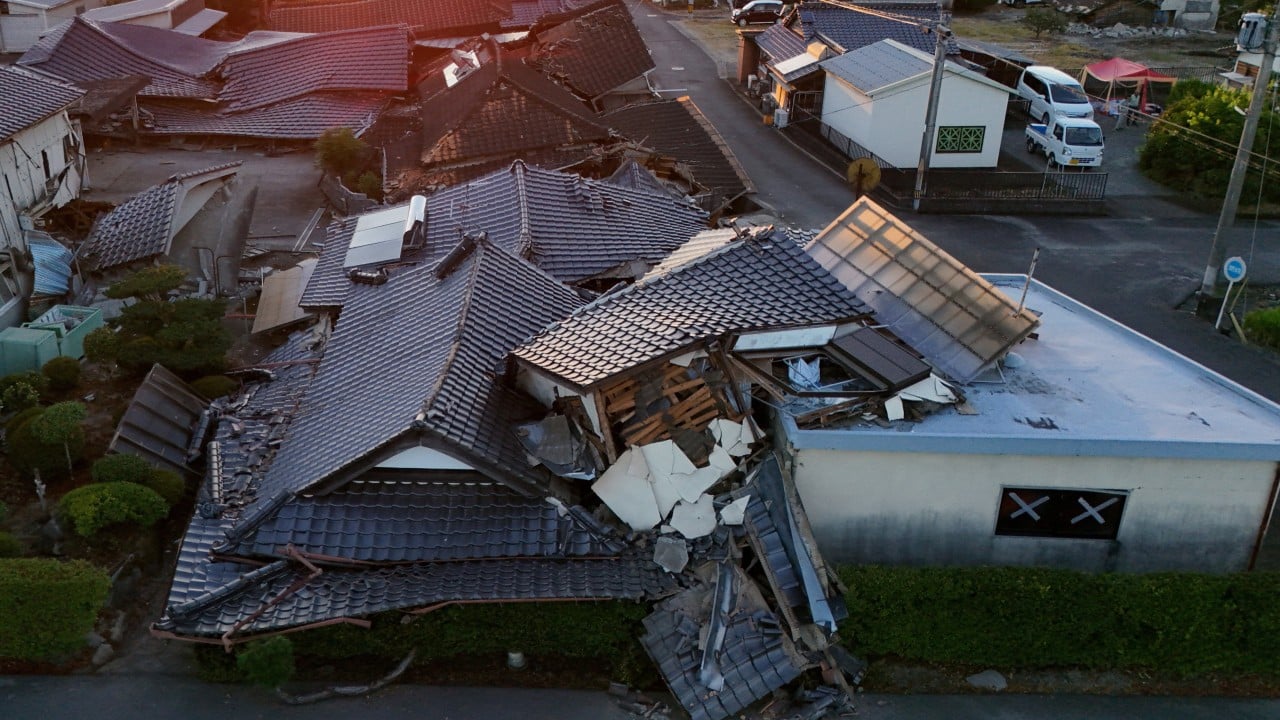
Over 1,000 still in Japan shelters 3 months after Kumamoto quake: ‘exhausted all the time’
More than 1,000 people are still taking shelter in evacuation centres, awaiting temporary housing three months after a magnitude 7.1 earthquake struck Japan’s Kumamoto prefecture, damaging their homes. The quake occurred at 4.27pm on July 28. As of Monday, the death toll stood at 38 – 36 from confirmed disaster-related causes and two suspected to be disaster-related – bringing the number of casualties to 420. Evacuation centres remain open at 21 locations in seven cities and towns. In...

Why is the US reluctant to give South Korea wartime control of its troops?
South Korea wants to take back wartime command of its troops from the United States within the next two years, but analysts say Washington is refusing to commit to a date to keep a hold on a military it sees as vital to countering China. The dispute is over wartime operational control, known as OPCON, which the US has held since shortly after the outbreak of the Korean war in 1950. If fighting were to break out again under the current arrangements, designated South Korean units would be assigned...

Tensions Between North and South Korea Stem From Decade-Old Border Dispute
A heated disagreement over recent land mine explosions is part of the legacy of the truce that halted the Korean War 73 years ago.

India Evacuates Tens of Thousands as Cyclone Arnab Approaches
The storm, Arnab, is forecast to make landfall Wednesday on the country’s eastern coast and then cut inland and head north toward Nepal.

Mongolia Eyes a Non-Permanent Seat on the UNSC – in 2048
To make good on Khurelsukh’s announcement, Mongolia’s foreign policy will require more than two decades of sustained continuity.

The Future of India-Israel Ties After Israel’s Election
The election may change the political setting in which India-Israel relations operate, but it is unlikely to erase the interests and institutional links that sustain them.

China Steps In to Rescue Stocks, But the Market Continues to Fall
The Communist Party uses a “national team” of state-owned investment funds to stem the market rout. But this time, investors are not sure it will work.

Japan Confirms Dispatch to India to Explore Anti-Ship Missile Drills
Discussions highlight the training challenges posed by Japan’s expanding arsenal and opportunities for closer defense cooperation with New Delhi.

China Is Learning to Sell Japanese Culture Better Than Japan
In much of the world, Chinese firms introduced local consumers to Japanese aesthetics. Now, they are ready to sell Japanese culture back to Japan itself.
YOUR NEWS, OUR NETWORK.
Do you have Great News you want to tell the world?
Be it updates about your business or your community, you can make sure that it’s heard by submitting your story to our network reaching hundreds of news sites across 6 verticals.