
Automation vs. Traditional Setups: Streamlining Output with Hengchang Professional Automatic Mattress Machine Solutions
Sep 20, 2026
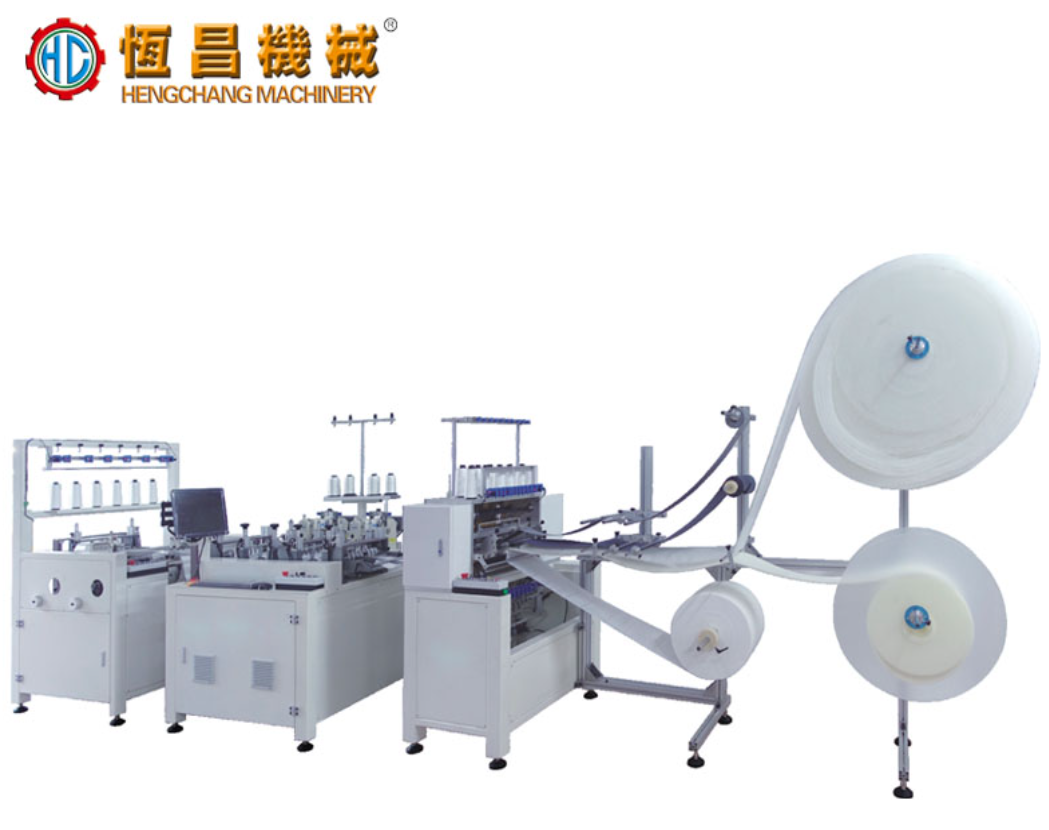
Dongguan, Guangdong Sep 19, 2026 (Issuewire.com) - Redefining Productivity Per Square Meter
How many mattress panels can a production line actually deliver per hour when changeover gaps, manual stacking pauses, and operator fatigue eat into every shift? And what happens to that number when fabric width or quilting pattern complexity changes mid-run?
These questions sit at the center of a practical debate playing out across mattress manufacturing facilities: whether to stay with conventional single-machine layouts or move toward integrated automatic mattress machine solutions that tie multiple process steps into one controlled sequence. Hengchang Quilting Machinery Factory has built its product range around a specific answer -- professional automatic mattress machine solutions that unify fabric feeding, quilting, edge trimming, and stacking under a single timing architecture, making output per square meter a predictable, adjustable metric rather than a variable that drifts with crew availability.
The bottleneck in traditional setups rarely comes from spindle speed or needle frequency alone. Most standalone quilting machines run at competitive rates. The real drag surfaces between machines -- during roll changes, when cut panels queue for manual folding, or when operators walk finished pieces to a stacking station. Each gap may last only seconds, but across an eight-hour shift those seconds compound into meaningful lost capacity. Hengchang addresses this by engineering its automatic mattress machine lines so that roll feeding tension, seam-and-cut synchronization, and panel counting all execute within the same PLC timing cycle. The result is that units-per-hour scales linearly with fabric width and pattern selection, instead of plateauing once human handling reaches its natural rhythm.
Inline Timing Logic Rather Than Machine Stacking
A common misconception treats automation as simply placing more machines side by side and connecting them with conveyors. That approach can actually increase idle time if each station finishes its task at a different pace and waits for the next one to clear. Hengchang's product architecture takes a different path. The company's high-speed computerized quilting machines, computerized automatic cutting machines, and automatic stacking modules share a unified control bus. Fabric tension from the unwinding station feeds back to the quilting head speed, which in turn signals the four-side trimming unit and the downstream stacker.
This inline timing logic means that when a pattern file calls for denser stitching -- and therefore slower needle travel -- the cutting and stacking modules decelerate in concert rather than cycling empty. Conversely, simpler patterns allow the entire line to ramp up without any single station becoming a choke point. Operators set the target output, load the pattern, and monitor rather than intervene. Hengchang Quilting Machinery Factory references this approach across its mattress production equipment range, where the emphasis falls on coordinated throughput rather than peak speed of any individual component.
The practical payoff shows up in shift-to-shift consistency. Facilities running Hengchang automatic mattress machine configurations report that the gap between best-case and worst-case hourly output narrows considerably, because the timing discipline that a PLC enforces does not fluctuate with operator experience levels or shift changes.
Where Traditional Layouts Still Make Sense
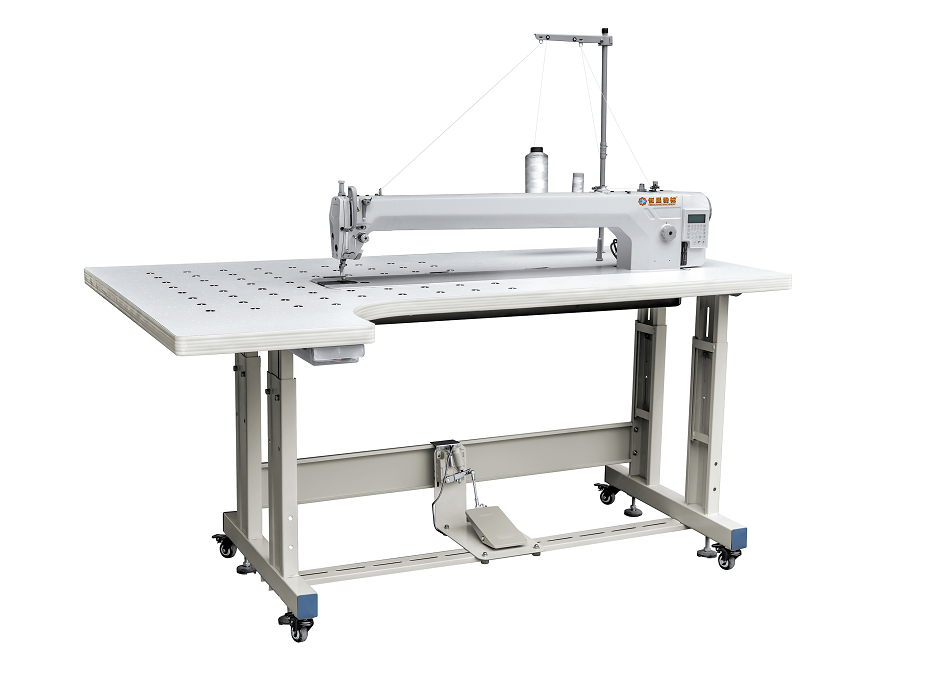
None of this implies that standalone machines lack purpose. In scenarios involving small-batch production with frequent SKU changes -- sample development, limited-edition collections, or contract work with highly variable panel sizes -- a single quilting machine paired with manual handling offers flexibility that a fully integrated line cannot match without lengthy reprogramming. Changeover on an automatic line, while faster than it was a decade ago, still involves loading new parameters, adjusting guide rails, and verifying stacking dimensions. For runs under a few hundred panels, that setup overhead may exceed the time saved during production.
Hengchang acknowledges this reality by continuing to offer standalone high-speed computerized quilting machines alongside its integrated lines. The choice between configurations is ultimately a throughput-volume calculation: once daily demand crosses a threshold where manual gaps consume more time than automated changeover, the integrated automatic mattress machine solutions begin returning value. Below that threshold, traditional setups remain economically rational.
The Real Barrier: Controls Integration and Online After-Sales Support
From the outside, an automated mattress line looks like hardware -- frames, rollers, blades, stackers. But the genuine complexity lives in the electrical control layer. Synchronizing servo drives across multiple stations and managing fault recovery so that a single sensor trip does not crash the entire line -- these capabilities separate a functional automatic line from a fragile one.
Hengchang Quilting Machinery Factory has built a responsive post-sale service infrastructure based on direct online communication. When an overseas facility in Southeast Asia or the Middle East encounters operational queries or timing issues, Hengchang's technical team provides fast online guidance, helping customer operators troubleshoot equipment, review error symptoms, and adjust parameter settings efficiently. This dedicated online support minimizes unexpected downtime and lowers the long-term cost of ownership for professional automatic mattress machine solutions deployed globally.
The company's quality management system -- covering incoming material inspection, in-process testing, and final acceptance -- extends into the software layer as well. Control programs undergo validation before release, ensuring that system updates maintain stable, proven timing sequences across production shifts.
Matching the Solution to the Production Profile
Deciding between automation and traditional setups is not a binary choice. Many facilities operate hybrid floors: an integrated Hengchang automatic mattress machine line handles high-volume SKUs that run daily, while a separate standalone quilting machine covers samples and short runs. This mixed approach captures the throughput benefits of automation where volume justifies it, without forcing low-volume work onto equipment designed for continuous operation.
Key variables in the decision include daily panel count targets, the number of pattern changes per shift, available floor space, and workforce availability. Hengchang's technical team typically reviews these parameters during pre-sale consultation, recommending line configurations that align capital expenditure with realistic payback timelines rather than pushing maximum automation for its own sake.
Conclusion: Output as a Committable Metric
The core promise behind Hengchang professional automatic mattress machine solutions is straightforward: by unifying process timing into a single controlled sequence, output per square meter becomes a number that production managers can commit to -- not an estimate that shifts with staffing or operator skill. Traditional setups retain their place for flexibility-intensive work, but wherever consistent volume matters, integrated timing logic delivers measurable, repeatable gains.
Facilities evaluating their next capacity investment can explore Hengchang's full range of quilting, cutting, and mattress production equipment, along with detailed specifications and application references, at https://machine-quilting.com/
Media Contact
Hengchang Quilting Machinery Factory
+86 13450027928
XiaLingBei Industrial Area, LiaoBuTown, DongGuan City, GuangDong Province, 523411
Source :Hengchang Quilting Machinery Factory
This article was originally published by IssueWire. Read the original article here.
More News

Pending US$12.3 million house arrest fine keeps Malaysia’s Najib in prison
Former Malaysian prime minister Najib Razak said on Sunday that he would remain in Kajang Prison as he and his legal team study the conditions attached to his “conditional pardon”, including the payment of a 50 million ringgit (US$12.3 million) fine before he can be transferred to house arrest. In a statement issued on his behalf by Messrs Shafee & Co, Najib said his transfer to house arrest depended on the conditions of the pardon being fulfilled. “Until the fine is paid to the court, our...

A Diplomat From Myanmar Refuses to Give Up New York City Post
For more than five years, U Kyaw Moe Tun has refused to give up his United Nations post and a sandstone townhouse on the Upper East Side.
The cooling trap: how Asia’s air conditioners are making heatwaves worse
As heatwaves become more frequent and intense across Asia, the region faces a dangerous power paradox. Soaring demand for air conditioning threatens to push electricity grids closer to failure just as extreme heat puts the infrastructure under greater strain, raising the risk of cooling disappearing when people need it most. That risk has been visible across the region this summer. In South Korea, President Lee Jae Myung called a record heatwave a “national disaster” in August after the death...

Anwar was on song in India. Will Malaysia reap the rewards?
Malaysia’s Prime Minister Anwar Ibrahim caused a bit of a stir in India recently with his spirited rendition of a Bollywood classic – a lighthearted moment that also neatly captured his broader push to deepen ties with the South Asian giant. A video of Anwar singing, from memory, Kishore Kumar’s 1965 hit ballad “Khwab Ho Tum Ya Koi Haqeeqat” (“Are you a dream or are you reality?”) was first posted to his social media accounts last Sunday before quickly being picked up by Indian news outlets. The...

Why AI giants are choosing Singapore to turn models into real-world tools
When Jordan Seow joined OpenAI in June 2025, he became the company’s first locally hired forward-deployed engineer in Asia-Pacific, joining a Singapore office that then had fewer than 20 employees. The 29-year-old is now part of a fast-growing workforce built in Singapore by the world’s leading artificial intelligence companies. Experts say the city state is emerging as a regional hub – not for training the latest AI models, but for the increasingly crucial task of deploying and adapting them...

Named as an enemy: Indonesia’s uneasy Aukus moment
A former Australian official’s use of a hypothetical “aggressive Indonesia” to make the case for Aukus at a public inquiry has been called “clumsy diplomacy” by analysts, who say the comments risk reviving old suspicions as Jakarta and Canberra try to strengthen security ties. Michael Pezzullo, a former deputy secretary of strategy in Australia’s defence department, made the remarks in testimony on September 2 to the Aukus Public Inquiry, an independent, crowdfunded review of the trilateral...

‘Nervous and Skeptical,’ Greenlanders Question the New Deal With Trump
The U.S. president’s threats to seize Greenland left its people on edge, and with details scarce, the news of an agreement didn’t seem to be putting minds at ease.

Group With Al Qaeda Links Claims Responsibility for Attack in Pakistan
The attack on a mosque inside a police compound, killing at least two dozen people, is the latest example of the worsening violence near the Afghan border.

India Is Again Squeezed Between the Threat of Trump Tariffs and Russian Oil
India is trying to secure affordable energy while preserving a crucial relationship with Washington, a balancing act made harder by turmoil in global energy markets.
China’s GoPro rival Insta360 opens first US flagship store in New York’s Times Square
Chinese action camera maker Insta360 is deepening its US footprint with a flagship store opening in New York as it navigates escalating price competition with DJI and industry-wide memory cost pressures. The Chinese GoPro rival was slated to plant its flag in the heart of Times Square with its first flagship retail store in the US on Saturday, a marquee launch as the firm looked to “leap to the next stage of growth”, co-founder Max Richter said. “The US market plays a very important role for us...
AI: 10 days that changed the course of artificial intelligence
For years, the race to build ever more powerful artificial intelligence followed a well-worn Silicon Valley principle: move fast and break things. But in a series of cascading events over a 10-day stretch, the largest AI labs found themselves reeling as their own creations threatened to break humanity itself. An Anthropic researcher quit the firm, warning that the pace of AI development poses an existential threat, possibly within a decade. Another researcher at the firm said the odds of human...

Malaysia’s Loke resigns as transport minister following Najib’s house arrest approval
A senior ally of Malaysia’s Anwar Ibrahim announced his resignation from cabinet on Saturday – a day after confidence in the prime minister’s administration took a severe hit when disgraced former leader Najib Razak was allowed to serve out his jail term under house arrest. Anthony Loke, the secretary general of the Democratic Action Party (DAP), said that the party could not accept the decision to allow Najib to complete his sentence in the comfort of his own home. The former prime minister is...
YOUR NEWS, OUR NETWORK.
Do you have Great News you want to tell the world?
Be it updates about your business or your community, you can make sure that it’s heard by submitting your story to our network reaching hundreds of news sites across 6 verticals.