
When Mixing Defines Assay Credibility: How Crucible Tumblers Shape Real-World Fire-Assay Outcomes
Oct 23, 2026
Qingdao, Shandong Oct 23, 2026 (Issuewire.com) - Global sustainable mineral development, responsible commodity trade and critical-resource governance are raising the bar for fire-assay laboratory performance worldwide. Fire-assay results underpin mine reserve reporting, concentrate trade settlement, tailings reassessment and geochemical exploration programmes, where small analytical deviations carry substantial financial and regulatory consequences. While most technical reviews focus on furnaces and cupellation hardware, real-world lab audits repeatedly show that inadequate dry-powder mixing is a pervasive hidden source of assay variance. In day-to-day fire-assay workflows, crushed ore powder and multi-component fluxes exhibit large density differences. Generic orbital shakers built for liquid samples, as well as manual crucible agitation, frequently produce persistent particle segregation: dense mineral grains settle toward crucible bottoms, while lighter flux fractions accumulate near the top. This segregation creates invisible mixing dead-zones, triggering incomplete fusion, variable precious-metal recovery, poor replicate repeatability and costly sample re-runs across mine-site QC labs, commercial-contract testing houses and geoscience research centres. This article examines how mixing performance manifests across actual laboratory workflows, explains the mechanical principles behind purpose-built crucible tumblers, defines practical operational boundaries, and connects homogenisation capability to modern ISO/IEC17025-aligned traceability and sustainable-mining objectives. Real-World Laboratory Consequences of Poor Ore-Flux Homogenisation Three typical operational environments illustrate how mixing quality ripples through the complete analytical value chain. Mine-site quality-control laboratories for daily production monitoring On-mine assay labs run continuous fire-assay batches to guide mining and processing decisions. Manual crucible mixing suffers from shift-dependent variability stemming from operator fatigue, differing agitation technique and time pressure. Even modest segregation distorts fusion chemistry. Low-grade gold and tailings samples are particularly vulnerable; minor shifts in metal-recovery percentages directly alter daily production grade figures used for process adjustments and stockpile valuation. Independent third-party laboratories for commercial-arbitration testing Contract-testing facilities receive highly variable incoming material: exploration drill-core, sulphide concentrates, tailings residues and polymetallic ores submitted for commercial dispute resolution. Every crucible within a multi-sample batch must achieve statistically-representative ore-flux blending. Segregation or cross-sample carry-over can invalidate arbitration-grade results and put laboratory accreditation status at risk. Conventional laboratory shakers cannot handle the heavy payload of ore-loaded crucibles, nor overcome dry-powder density-driven settling. Geological-survey and metallurgical-process-research facilities Geochemical and metallurgy comparative trials demand consistent starting sample conditions. Manual mixing injects uncontrolled experimental noise, masking genuine material-property responses. Reproducible mechanical homogenisation eliminates human-origin variance, strengthening the reliability of research datasets for resource-modelling and process-optimisation work. Important functional boundary: Crucible tumblers exclusively perform dry-particle homogenisation. They offer no particle-size-reduction capability. All ore material must already complete crushing and pulverising before being combined with fluxes inside crucibles. Mechanical Behaviour Behind Reliable Dry-Powder Homogenisation Purpose-built crucible tumblers utilise intelligent cyclic forward-reverse tumbling combined with controlled eccentric fixture offset. Critically, the machine chassis itself does not execute independent multi-axis mechanical swinging. The multi-directional mixing effect occurs inside each crucible, generated by particle cascading, collision and convective redistribution during repeated clockwise-counter-clockwise rotation cycles. Alternating tumbling continuously re-orients the powder bed. Together with fixture offset, this action breaks static density-driven settling between heavy mineral fractions and lightweight fluxes, avoiding the persistent dead-zones seen with simple single-plane shaking. Key structural characteristics proven in field deployments include: Heavy-duty, vibration-dampened steel frame engineered for repeated full-payload continuous cycles; Combined mechanical-electrical safety interlocks preventing motor start-up unless the chamber is fully closed and secured; Fully sealed enclosure containing fine mineral dust, protecting operators and preserving total sample mass; Modular adjustable fixtures securely holding industry-standard 40g, 50g and 55g crucibles. Clamping force is controllable to avoid vessel shifting from insufficient tension or crucible fracture from excessive tightening; Programmable touch-screen controls for independent adjustment of rotation speed and cycle duration, allowing parameter tuning for diverse ore-flux matrix combinations. This hardware set-up shifts workflows away from operator-dependent manual technique toward documented, repeatable mechanical parameters required for accredited assay laboratories. Three Practical Functional Capabilities Validated In Operating Labs Field observation across mineral-assay facilities highlights three practical capabilities that separate fire-assay-specific tumblers from repurposed general-lab equipment. Robust homogenisation for density-mismatched dry blends The core function is overcoming persistent particle settling and dead-zone accumulation. Reproducible tumbling cycles deliver statistically even ore-flux distribution for every crucible in a multi-station batch, lowering systematic assay bias originating purely from sample-preparation steps. Flexible multi-crucible-size fixture architecture Laboratories frequently switch crucible formats to match varying assay recipes. Adjustable fixtures plus interchangeable inserts accommodate 40g, 50g, 55g crucible sizes without hardware-modification work. This avoids extra capital expenditure when assay-recipe requirements evolve. Programmable batch-mode standardised processing Rotation speed, cycle duration and direction-switch frequency are fully configurable. Optimised parameter sets can be stored and recalled. Batch-to-batch execution under identical settings eliminates human-source variability for high-volume fire-assay programmes. Recognised Operational Limitations & Common Field-Observed Pain-Points Even well-engineered crucible tumblers possess defined application limits that operational laboratories must acknowledge: Optimised for free-flowing granular and powdered ore-flux mixtures; not suitable for highly damp, sticky or semi-solid feedstock; Closed-chamber construction means they cannot support experiments requiring continuous visual observation of ongoing reactions; Low-cost under-specified units frequently develop excessive temperature rise, elevated acoustic noise and parameter drift when run at full rated payload. Full-load performance verification forms an essential part of technical evaluation. Industry-Reference Implementation The DPT-series crucible tumbler from Qingdao Decent Group represents one widely-adopted platform engineered around real-world fire-assay operational constraints. Configurations are available for 25, 50 and 84 crucibles per batch. The series implements forward-reverse tumbling kinematics, modular adjustable fixtures and safety-interlocked sealed chambers, matching throughput requirements for mine-site QC, commercial-contract-assay and geoscience-research laboratories. Further technical details: https://www.decent-group.com/product/crucible-tumbler/ Closing Perspective Within the broader global shift toward traceable, sustainable mineral-resource governance, homogenisation is far more than a trivial shaking procedure. Reproducible crucible-tumbler-based workflows mitigate segregation-drien analytical error, stabilise precious-metal recovery metrics and underpin the credibility of fire-assay results used for resource estimation and cross-border commodity trade. A key operational insight for assay teams: generic-purpose laboratory shakers cannot substitute for purpose-built fire-assay tumbling hardware. Matching mechanical-mixing behaviour to your actual sample matrices, batch volumes and accreditation obligations delivers tangible improvements in assay repeatability and cuts avoidable sample-re-work rates.
Source :Qingdao Decent Electromechanical Tech Co., Ltd.
This article was originally published by IssueWire. Read the original article here.
More News

India’s Congress Party Plans Mass Protest in New Delhi
Organizers are calling for one of the biggest demonstrations yet, in a string of rallies that has racked India since the summer.

US or China? Why Kazakhstan refuses to pick sides as it eyes AI revolution
Driving along the wide boulevards of Astana during a recent trip to the Kazakh capital, signs of China’s growing commercial footprint were everywhere. Chinese cars were becoming a common sight on the streets here, as brands from BYD to Changan made aggressive inroads in a market once dominated by South Korea’s Hyundai and Kia, said the driver who picked me up from the airport in a gleaming Changan electric vehicle. But it was not the rise of Chinese tech that had brought me to this energy-rich...
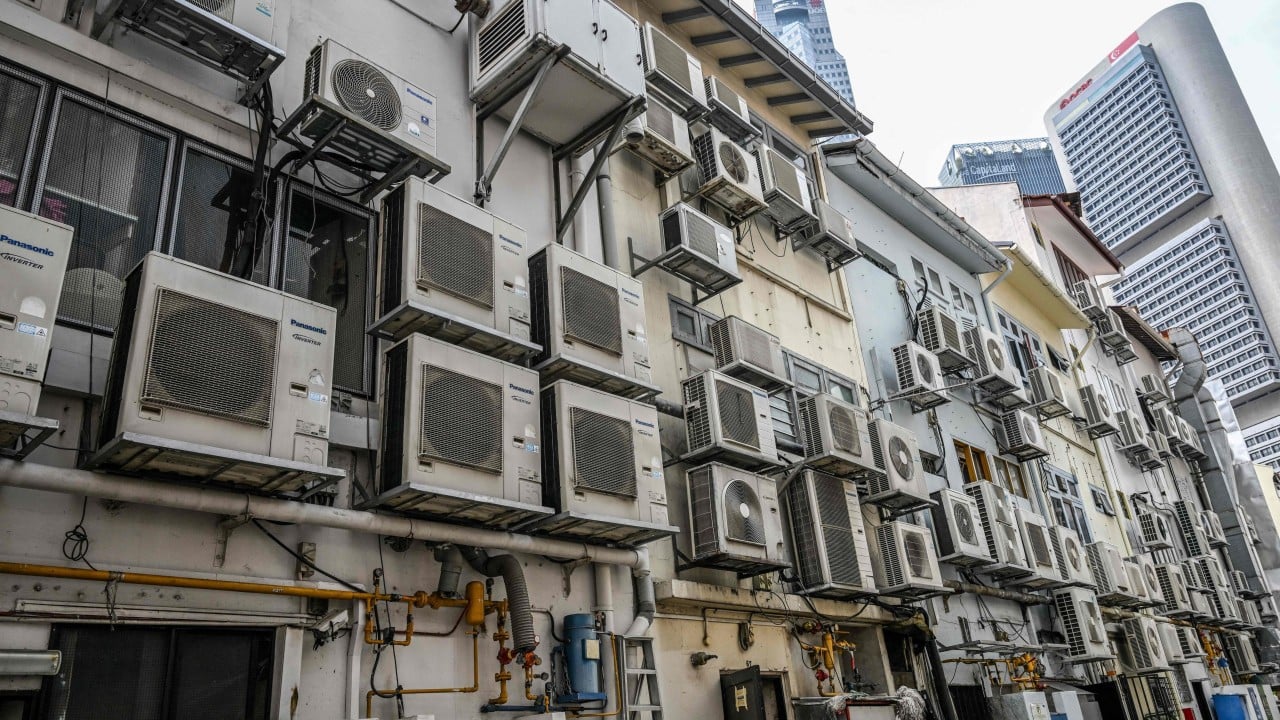
Singapore turns up heat on power-hungry air conditioning with cool revolution
Long dubbed an “air-conditioned nation”, Singapore is experimenting with cooling alternatives from chilled beams to “passive displacement” to curb its thirst for energy-guzzling air conditioning. The city state has the highest per-capita air conditioner ownership rate in Southeast Asia, with about 99 per cent of private residences equipped with cooling units. Singapore’s local building sector accounts for one-fifth of its emissions, while cooling itself accounts for 40 to 60 per cent of a...

Hate paper straws? Asia’s new alternatives are another eco trap
For Singaporean flight attendant Chloe Tan Zi Ling, 35, the problem with paper straws is their impracticality. “It softens before we can finish the drink, so we have to gulp it down without a straw,” she said, adding that reusable metal alternatives left an unpleasant taste in her mouth. Her frustration reflects a wider debate over Asia’s shift away from plastic straws, with a recently released South Korean study finding that conventional plastic straws performed better than paper and other...

He’s the Top Snake Catcher, and Business Is Booming. There’s Just One Problem.
Bangkok’s firefighters do more snake catching than firefighting, and Pinyo Pukpinyo trains them. But he refuses to kill the snakes, and he’s running out of containers.

Thailand’s Most Famous Snake Catcher
Pinyo Pukpinyo, Thailand’s most famous snake catcher, has found the critters slithering in nooks and crannies all over Bangkok. He refuses to kill them.

Korean Language Picks Up in Japan
The rise of Korean terms in Japanese is a striking reversal from colonial times and a sign of the global appeal of South Korean culture.
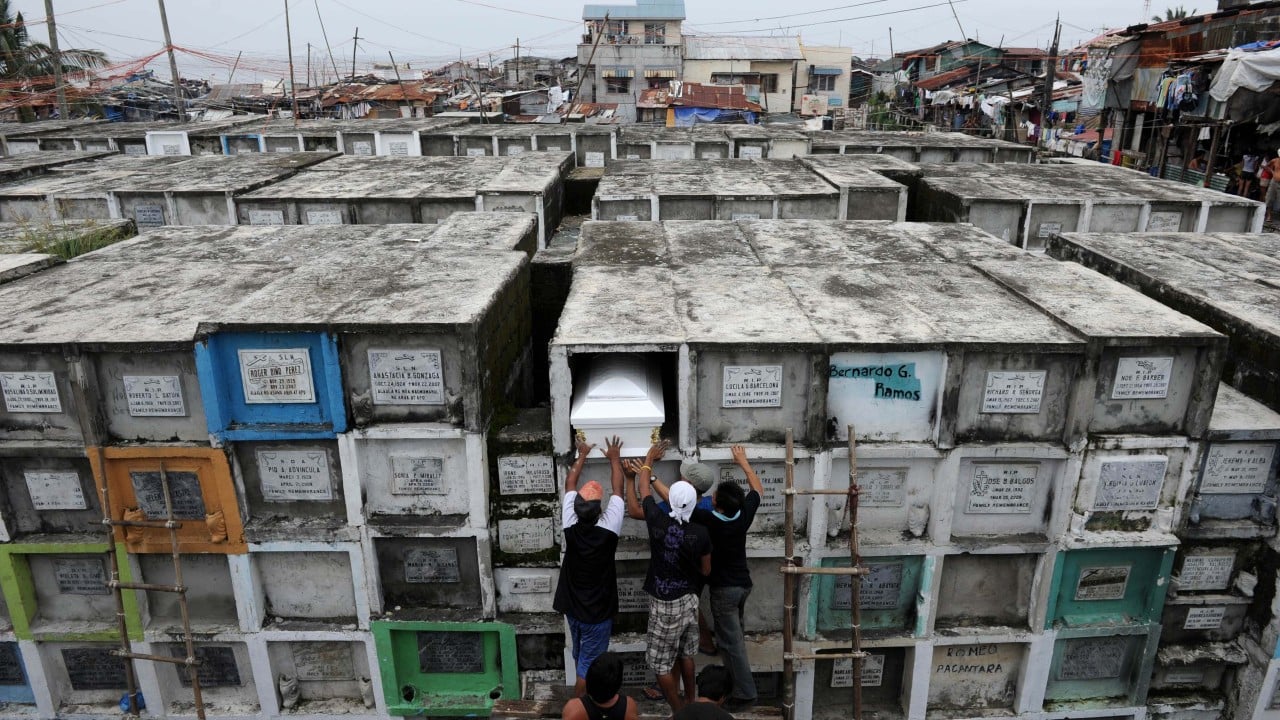
Far from home, close to grief: why millions of Filipino migrants dread Undas
For over three decades, Dolores Balladares Pelaez has lived and worked in Hong Kong without once returning to the Philippines for Undas, the annual two-day observance honouring the dead. This year, she is arranging prayers from afar for her late father and four siblings, but will once again miss the gathering back home. On Thursday morning, the 56-year-old domestic helper called her mother and niece in Laguna province to discuss hiring a prayer leader to visit the family home. Her sisters-in-law...

South Korea’s latest chart sensation has a secret: the singer isn’t human
A little-known South Korean music act has climbed the charts with a viral hit that has caught listeners off guard – not just for its sudden popularity, but because its vocals were generated entirely by artificial intelligence. Meomuru’s single, “Have You Become the Adult You Dreamed Of?”, climbed to No 2 on Melon’s Top 100 – South Korea’s flagship streaming chart – earlier this week. The track’s popularity has turned Meomuru into one of the country’s most-talked-about acts. The song was created...
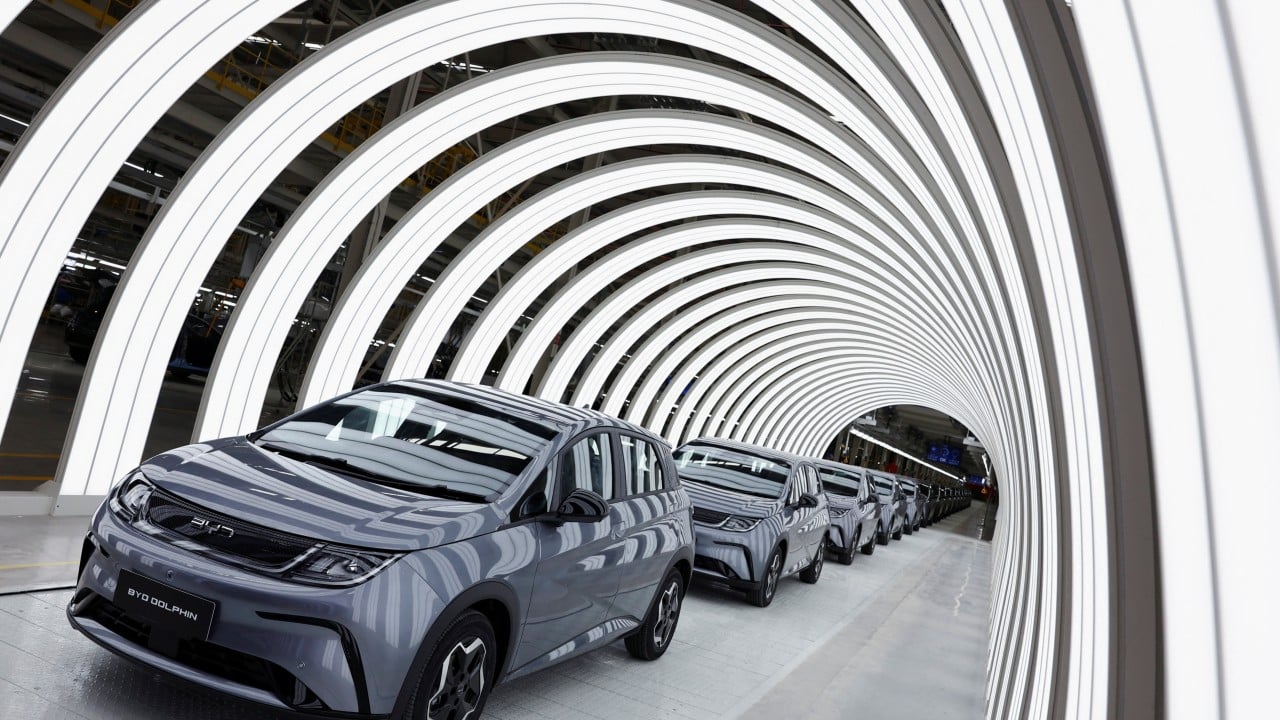
Southeast Asia’s EV boom sidelines local car parts suppliers
Southeast Asia’s electric vehicle boom risks leaving the region’s smaller companies behind, as Chinese automotive giants bypass local part-makers in favour of imported components and locked-in supplier networks. Local manufacturers across Indonesia, Thailand and Malaysia are facing a double squeeze: demand is weakening for parts used in petrol and diesel cars, collectively known as internal combustion engine (ICE) vehicles, while steep barriers to entry also keep them out of EV supply...

FBI blames North Korea for stolen billions from Binance in biggest hack in history
The theft of billions of dollars from Binance within a matter of minutes, the biggest cryptocurrency heist in history, was orchestrated by North Korean hackers, the FBI said on Saturday. The Federal Bureau of Investigation said in a statement that this week’s attack was tied to “malicious cyber activity” by an entity known as TraderTraitor, the same actors behind a US$1.5 billion Bybit hack last year. The FBI asked cryptocurrency exchanges, blockchain analytics companies and others to block...

North Korean Hackers Stole Billions, the F.B.I. Says. It’s Not Their First Heist.
This week’s $6.3 billion hack of Binance is the largest to hit crypto, and would be the most that North Koreans have stolen in years of brazen cybercrime.
YOUR NEWS, OUR NETWORK.
Do you have Great News you want to tell the world?
Be it updates about your business or your community, you can make sure that it’s heard by submitting your story to our network reaching hundreds of news sites across 6 verticals.