
Lab Pulverizer Selection Guide for Mineral Sample-Preparation: Three Core Evaluation Dimensions - Industry Value
Oct 23, 2026
Qingdao, Shandong Oct 23, 2026 (Issuewire.com) - Against global green-mining transition and tightening resource-governance frameworks, mineral laboratories worldwide are advancing toward standardised, traceable and high-fidelity sample-preparation workflows. Statistical data from global spectroscopic-analysis communities indicates that over 60% of analytical deviations within mineral assaying stem from pre-treatment steps, with pulverisation being a dominant source of measurement bias. Many procurement teams focus excessively on upfront unit price and nominal final fineness, while overlooking hidden risks and long-term costs arising from equipment stability, sample-recovery performance and contamination-mitigation capacity. A well-specified laboratory vibratory pulverizer is more than a simple grinding tool. It functions as a critical process instrument governing preparation accuracy, controlling total-cost-of-ownership, and securing compliance for mineral-assay data. This article elaborates three fundamental evaluation pillars: preparation-accuracy assurance, full-lifecycle-cost management and laboratory-workflow compatibility. It provides objective technical guidance for laboratories to establish robust supplier-assessment frameworks aligned with ISO/IEC17025-compliant operations. 1. Grinding Mechanism & Material Compatibility -- Foundational for Analytical Accuracy Mineral matrices cover high-hardness rock samples, brittle mineral concentrates, trace-element-bearing ores and precious-metal-rich feedstock. Pulverisation requirements vary substantially across material types. The core value of professional lab pulverizers lies in eliminating preparation-origin bias through optimised mechanical principles and interchangeable grinding-set materials. Vibratory Grinding Mechanism: Balancing Particle-Size Uniformity and Sample Integrity The widely-adopted vibratory-disc pulveriser delivers combined impact, compression and friction forces driven by high-frequency vibration, differentiating it from basic single-shear crushing equipment. This integrated comminution action enables simultaneous particle size reduction and homogenisation, minimising local over-grinding or incomplete size reduction. Stable vibration amplitude and frequency control deliver consistent grinding-energy input, producing uniform particle fractions that support reproducible performance for downstream digestion, fusion and spectroscopic testing. Higher rotational / vibratory parameters do not always yield superior outcomes. Excessive operating temperature induced by over-aggressive vibration may cause mass loss of volatile analytes such as arsenic and mercury. Insufficient vibratory intensity results in particles failing to meet standard 200-mesh analytical fineness. Qualified instruments maintain tightly-locked vibration parameters for routine mineral-sample processing. Application-Specific Grinding-Set Materials: Mitigating Extraneous Contamination Peer-reviewed mineral-testing literature identifies grinding-bowl material as a primary source of secondary sample contamination. Manganese-steel bowls offer general-purpose durability yet introduce interference for iron- and manganese-targeted analyses. Tungsten-carbide and zirconia grinding sets exhibit elevated hardness with negligible metallic leaching, making them suitable for trace-element and precious-metal analytical workflows. Competent OEMs provide multi-material interchangeable grinding-bowl options matched to laboratory test portfolios, ore hardness and elemental-sensitivity requirements. This hardware-level contamination control preserves sample purity and analytical authority -- a capability absent from generic laboratory grinding equipment. Sealed-Chamber Architecture: Securing Sample-Recovery and Reducing Batch Discrepancy For precious-metal and low-volume exploration samples, micro-scale powder loss generates meaningful grade bias. Premium pulverisers implement closed-chamber construction together with precision pneumatic clamping. This design restricts dust escape and minimises fine-powder adhesion onto chamber surfaces. Improved sample-recovery rates preserve the integrity of arbitration-grade and scarce exploration specimens, lowering experimental-rework overhead. 2. Long-Term Stability & Maintenance Expenditure -- Managing Hidden Laboratory Costs Capital procurement decisions must prioritise full-lifecycle costs beyond purchase price. Low-cost simplified units demonstrate rapid wear, frequent malfunctions and performance drift. Their cumulative long-run expenditure often surpasses robust industrial-grade instruments. Mechanical Stability: Minimising Downtime-Driven Opportunity Loss Mineral-testing laboratories operate under continuous high-duty cycles. Entry-level machines suffer growing transmission clearances and insufficient frame rigidity, leading to vibration offset, mechanical sticking and excessive noise after prolonged runtime. Unplanned equipment failures disrupt preparation workflows and delay reporting timelines, producing tangible commercial losses for third-party contract labs and mine-site QC facilities. Production-grade pulverisers undergo full-machine fatigue validation. Reinforced transmission assemblies, sealing systems and structural frames sustain continuous full-load cycles without positional drift or thermal overshoot, reducing unplanned downtime and securing workflow continuity. Consumable Interoperability & Replacement Costs: Reducing Ongoing Operational Burden Grinding bowls, sealing gaskets and damping cushions represent routine wear components. Reputable suppliers deliver standardised, interchangeable spare parts with transparent pricing and straightforward replacement procedures, avoiding complete unit disassembly or premature equipment obsolescence. Non-standard components supplied by niche vendors create extended lead-times and inflated recurring maintenance expenditure. Low-Residue Chamber Design: Optimising Labour Costs for Cleaning Operations Streamlined, dead-zone-free internal chamber geometry simplifies cross-batch cleaning and reduces the requirement for repeated disassembly and purging. For facilities running frequent multi-matrix sample sequences, this characteristic cuts manual-cleaning labour input, elevates overall sample-preparation throughput. 3. End-to-End Application-Support Capability -- Alignment With Complete Preparation Workflow Lab pulverisers do not function as isolated standalone units; they represent one segment within integrated mineral-sample-preparation lines. Vendors limited to hardware supply cannot resolve process-mismatch risks. Suppliers specialised in mineral-laboratory solutions deliver value through workflow-oriented technical services. Application-Condition Expertise: Matching Equipment Performance Against Sample Properties Domain-focused OEMs understand material boundaries including ore hardness, moisture content and starting-particle-size distributions. They provide parameter tuning and operational recommendations for challenging matrices, for example pre-treatment protocols for high-moisture cohesive ores or wear-component selection for ultra-hard drill-core specimens, preventing feed-blockage and inadequate pulverisation outcomes. Workflow-Integration Competency: Supporting Standardised SOP Implementation Qualified vendors deliver layout consultation, parameter commissioning and hands-on operational training. This ensures seamless process linkage between pulverisers and upstream crushing / splitting instruments as well as downstream fire-assay and fusion hardware. Such support facilitates compliance against ISO/IEC17025 laboratory-management-system requirements. Verifiable Performance Validation: Defining Acceptance Criteria for Procurement Credible manufacturers avoid over-stated marketing specifications. They supply empirical test reports covering achieved fineness, sample-recovery figures and full-load stability performance, and support customer witness-testing using real-world mineral specimens. This mitigates procurement risks associated with nominal-specification exaggeration. 4. Reference Industrial-Grade Solution for Mineral-Labratory Deployment Modern standard-compliant mineral-testing laboratories select vibratory pulverisers optimised for analytical accuracy, low-maintenance operation and workflow integration. The DP2000 Lab Pulverizer Mill manufactured by Qingdao Decent Group fulfils these combined technical requirements. Built upon high-stability vibratory comminution principles and fitted with pneumatic bowl-clamping hardware, the DP2000 achieves consistent particle-size reduction together with high sample-recovery performance. Interchangeable grinding-bowl material options mitigate extrinsic contamination across diverse analytical programmes. Validated through full-load fatigue testing, this unit delivers low failure frequency and straightforward servicing. Supported by turn-key mineral-laboratory solution capabilities, the DP2000 integrates seamlessly into complete sample-preparation workflows. It serves mine-site QC labs, third-party contract-testing facilities, geological-survey institutes and fire-assay pre-processing workflows, striking balanced performance across precision, total-cost-of-ownership and system-compatibility requirements. Product link: https://www.decent-group.com/product/lab-pulverizer-mill-dp2000/ 5. Operational Boundaries & Procurement Best-Practice Summary Effective pulveriser selection prioritises controllable accuracy, predictable lifecycle-cost profiles and workflow compatibility over marketing-driven performance claims or low upfront pricing. Three core assessment dimensions guide vendor screening: Whether grinding mechanics and grinding-set-material offerings satisfy analytical-precision targets and contamination-control objectives; Whether mechanical robustness and after-sales-support frameworks mitigate long-term hidden operational costs; Whether the vendor demonstrates mineral-matrix expertise and delivers verifiable application-validation services. Users must acknowledge instrument operational boundaries. Vibratory pulverisers are not suited for highly-moisture-laden or strongly cohesive feedstock. Prospective buyers shall complete matrix-fit assessment against local sample characteristics, analytical scope and daily-throughput demands before final equipment selection. Within the global trend toward mineral-laboratory standardisation, high-performance pulverisation hardware forms a foundational enabler for laboratory quality improvement, cost-control and regulatory compliance. Frequently Asked Questions Q1: What key differentiators separate mineral-grade vibratory pulverisers from general-purpose laboratory grinding equipment? Generic lab grinders are built for low-abrasion, small-volume specimen processing and frequently lack heavy-duty structural frames, sealed-dust-containment and multi-material grinding-set compatibility. Mineral-focused vibratory pulverisers are engineered for continuous high-abrasion ore processing. They incorporate pneumatic secure clamping, optimised vibration dynamics and contamination-mitigation features, delivering superior reproducibility, sample recovery and operational safety for mineral-assay workflows. Q2: Why is full-lifecycle-cost assessment critical for mineral-laboratory pulveriser procurement? For high-volume mineral-testing labs, unplanned downtime, frequent consumable replacement, sample-re-run costs driven by contamination or poor pulverisation quality generate substantial indirect expenditure. Initial purchase price represents only one component of total asset expense. Evaluation shall incorporate mechanical durability, spare-part availability, cleaning overhead and sample-failure-related re-work risk. Q3: How does pulveriser performance influence green-mining and mineral-resource-evaluation outcomes? Resource-reserve calculation, commodity trade settlement and circular-economy assessment for mine-tailings all rely on representative analytical data. Pulverisation-introduced bias distorts assay figures, mis-representing ore-body characteristics and hindering evidence-based sustainable-mineral-resource governance. Reproducible, low-contamination sample-preparation is an essential prerequisite for credible mineral-data output.
Source :Qingdao Decent Electromechanical Tech Co., Ltd.
This article was originally published by IssueWire. Read the original article here.
More News

India’s Congress Party Plans Mass Protest in New Delhi
Organizers are calling for one of the biggest demonstrations yet, in a string of rallies that has racked India since the summer.

US or China? Why Kazakhstan refuses to pick sides as it eyes AI revolution
Driving along the wide boulevards of Astana during a recent trip to the Kazakh capital, signs of China’s growing commercial footprint were everywhere. Chinese cars were becoming a common sight on the streets here, as brands from BYD to Changan made aggressive inroads in a market once dominated by South Korea’s Hyundai and Kia, said the driver who picked me up from the airport in a gleaming Changan electric vehicle. But it was not the rise of Chinese tech that had brought me to this energy-rich...
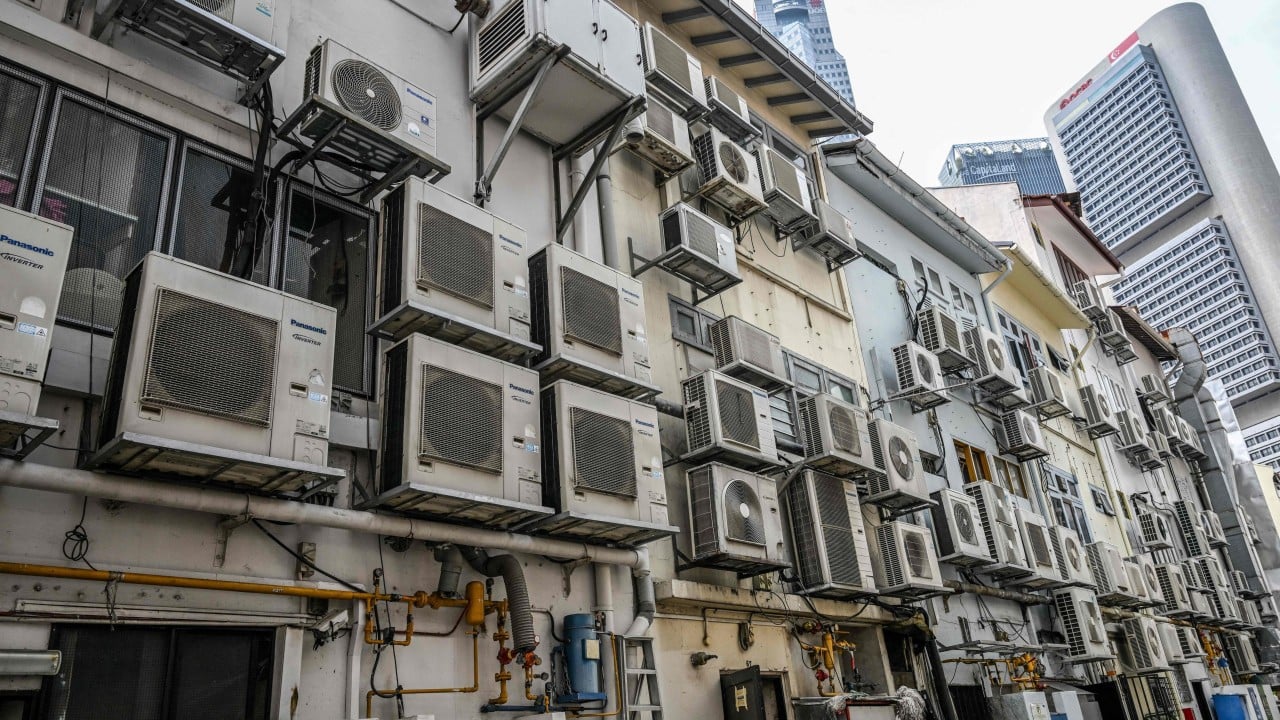
Singapore turns up heat on power-hungry air conditioning with cool revolution
Long dubbed an “air-conditioned nation”, Singapore is experimenting with cooling alternatives from chilled beams to “passive displacement” to curb its thirst for energy-guzzling air conditioning. The city state has the highest per-capita air conditioner ownership rate in Southeast Asia, with about 99 per cent of private residences equipped with cooling units. Singapore’s local building sector accounts for one-fifth of its emissions, while cooling itself accounts for 40 to 60 per cent of a...

Hate paper straws? Asia’s new alternatives are another eco trap
For Singaporean flight attendant Chloe Tan Zi Ling, 35, the problem with paper straws is their impracticality. “It softens before we can finish the drink, so we have to gulp it down without a straw,” she said, adding that reusable metal alternatives left an unpleasant taste in her mouth. Her frustration reflects a wider debate over Asia’s shift away from plastic straws, with a recently released South Korean study finding that conventional plastic straws performed better than paper and other...

He’s the Top Snake Catcher, and Business Is Booming. There’s Just One Problem.
Bangkok’s firefighters do more snake catching than firefighting, and Pinyo Pukpinyo trains them. But he refuses to kill the snakes, and he’s running out of containers.

Thailand’s Most Famous Snake Catcher
Pinyo Pukpinyo, Thailand’s most famous snake catcher, has found the critters slithering in nooks and crannies all over Bangkok. He refuses to kill them.

Korean Language Picks Up in Japan
The rise of Korean terms in Japanese is a striking reversal from colonial times and a sign of the global appeal of South Korean culture.

Far from home, close to grief: why millions of Filipino migrants dread Undas
For over three decades, Dolores Balladares Pelaez has lived and worked in Hong Kong without once returning to the Philippines for Undas, the annual two-day observance honouring the dead. This year, she is arranging prayers from afar for her late father and four siblings, but will once again miss the gathering back home. On Thursday morning, the 56-year-old domestic helper called her mother and niece in Laguna province to discuss hiring a prayer leader to visit the family home. Her sisters-in-law...

South Korea’s latest chart sensation has a secret: the singer isn’t human
A little-known South Korean music act has climbed the charts with a viral hit that has caught listeners off guard – not just for its sudden popularity, but because its vocals were generated entirely by artificial intelligence. Meomuru’s single, “Have You Become the Adult You Dreamed Of?”, climbed to No 2 on Melon’s Top 100 – South Korea’s flagship streaming chart – earlier this week. The track’s popularity has turned Meomuru into one of the country’s most-talked-about acts. The song was created...

Southeast Asia’s EV boom sidelines local car parts suppliers
Southeast Asia’s electric vehicle boom risks leaving the region’s smaller companies behind, as Chinese automotive giants bypass local part-makers in favour of imported components and locked-in supplier networks. Local manufacturers across Indonesia, Thailand and Malaysia are facing a double squeeze: demand is weakening for parts used in petrol and diesel cars, collectively known as internal combustion engine (ICE) vehicles, while steep barriers to entry also keep them out of EV supply...

FBI blames North Korea for stolen billions from Binance in biggest hack in history
The theft of billions of dollars from Binance within a matter of minutes, the biggest cryptocurrency heist in history, was orchestrated by North Korean hackers, the FBI said on Saturday. The Federal Bureau of Investigation said in a statement that this week’s attack was tied to “malicious cyber activity” by an entity known as TraderTraitor, the same actors behind a US$1.5 billion Bybit hack last year. The FBI asked cryptocurrency exchanges, blockchain analytics companies and others to block...

North Korean Hackers Stole Billions, the F.B.I. Says. It’s Not Their First Heist.
This week’s $6.3 billion hack of Binance is the largest to hit crypto, and would be the most that North Koreans have stolen in years of brazen cybercrime.
YOUR NEWS, OUR NETWORK.
Do you have Great News you want to tell the world?
Be it updates about your business or your community, you can make sure that it’s heard by submitting your story to our network reaching hundreds of news sites across 6 verticals.