
John Sweetser Highlights a Practical Approach to Engineering Leadership
Oct 23, 2026

Mission architect and systems engineer shares how technical leaders can help high-potential engineers turn ambitious ideas into achievable solutions.
Littleton, Colorado Oct 23, 2026 (Issuewire.com) - Aerospace engineer and mission architect John Sweetser is drawing attention to an often-overlooked part of technical leadership: helping talented engineers understand the real-world constraints that determine whether an idea can move forward.
Sweetser has spent his career working across mechanical engineering, systems engineering, modelling, simulation, and spacecraft design. His experience has taken him from Sandia National Laboratories to Lockheed Martin and Sierra Space, followed by a transition to a smaller aerospace startup.
Across those roles, he has seen that some of the most difficult engineering problems are not caused by a lack of technical skill. They can emerge when highly capable people focus deeply on what is technically possible without accounting for schedule, risk, suppliers, customer needs, and the effects a decision may have on other systems.
Turning Technical Ability Into Mission Impact
Sweetser points to one experience involving an engineer he refers to as "Jeff" to protect the individual's identity.
Jeff had more than 20 years of experience in the space industry, a strong understanding of complex systems, and a high level of commitment to the mission. However, some of his concepts were difficult to implement because they relied on unproven technologies, introduced additional risk, conflicted with schedules, or required components that were not readily available.
For Sweetser, the answer was not to dismiss the ideas or exclude the engineer from the process.
"The challenge was not his technical ability or commitment," Sweetser says. "It was helping him account for the broader constraints that ultimately determine whether a strong engineering idea can move forward."
Sweetser began spending more one-on-one time working through the concepts. Instead of immediately explaining why an idea would not work, he used questions and whiteboard sessions to examine how it might actually be implemented.
That meant looking beyond the core technical concept to consider schedule limitations, technical risk, supplier availability, customer expectations, and the impact on surrounding systems.
Why Engineering Leaders Need to Explain the "Why"
Sweetser believes transparency becomes particularly important when a technically strong proposal is rejected.
"I believe there is nothing more important than honesty and transparency to be successful in any industry," Sweetser says. "Part of transparency is being able to engage in difficult conversations with critical customers, bosses and other coworkers."
In the example he shares, greater transparency changed the engineer's approach. Once the broader constraints became clearer, he began discussing concepts earlier and refining them before presenting them to larger groups.
Within several months, Sweetser says the engineer moved from being left out of some discussions to being sought out for guidance on other programs.
The experience reinforced a leadership principle Sweetser has carried into later roles: a rejected idea does not always mean the person behind it lacks judgment. Sometimes the engineer simply does not have access to the full set of constraints shaping the decision.
Asking Better Questions Before Building a Solution
Sweetser encourages engineers to widen their perspective before bringing a new concept to a team.
He recommends starting with three questions: What problem are we actually trying to solve? What assumptions are being made about technology readiness, schedule, or suppliers? Who and what other systems will be affected by the proposed change?
Those questions reflect the systems-level thinking that has become increasingly central to Sweetser's career.
His early work focused heavily on modelling and simulation for national security applications. He later moved into space vehicle design at Lockheed Martin before taking on broader technical leadership responsibilities at Sierra Space. Today, his work as a mission architect requires him to consider how individual engineering decisions fit into the goals and limitations of an entire mission.
For Sweetser, strong engineering leadership is not about limiting ambitious thinking. It is about giving ambitious ideas enough context to become useful.
About John Sweetser
John Sweetser is a mission architect, mechanical engineer, and systems engineer based in Littleton, Colorado. His career has included engineering and technical leadership roles at Sandia National Laboratories, Lockheed Martin, Sierra Space, and a smaller aerospace startup. His work has focused on modelling and simulation, space vehicle design, systems engineering, mission architecture, and technical leadership.
Sweetser earned bachelor's and master's degrees in mechanical engineering from the University of Colorado Boulder. Outside of his professional work, his interests include snowboarding, programming, ice racing, education, and sustainability.
Source :John Sweetser
This article was originally published by IssueWire. Read the original article here.
More News

India’s Congress Party Plans Mass Protest in New Delhi
Organizers are calling for one of the biggest demonstrations yet, in a string of rallies that has racked India since the summer.

US or China? Why Kazakhstan refuses to pick sides as it eyes AI revolution
Driving along the wide boulevards of Astana during a recent trip to the Kazakh capital, signs of China’s growing commercial footprint were everywhere. Chinese cars were becoming a common sight on the streets here, as brands from BYD to Changan made aggressive inroads in a market once dominated by South Korea’s Hyundai and Kia, said the driver who picked me up from the airport in a gleaming Changan electric vehicle. But it was not the rise of Chinese tech that had brought me to this energy-rich...
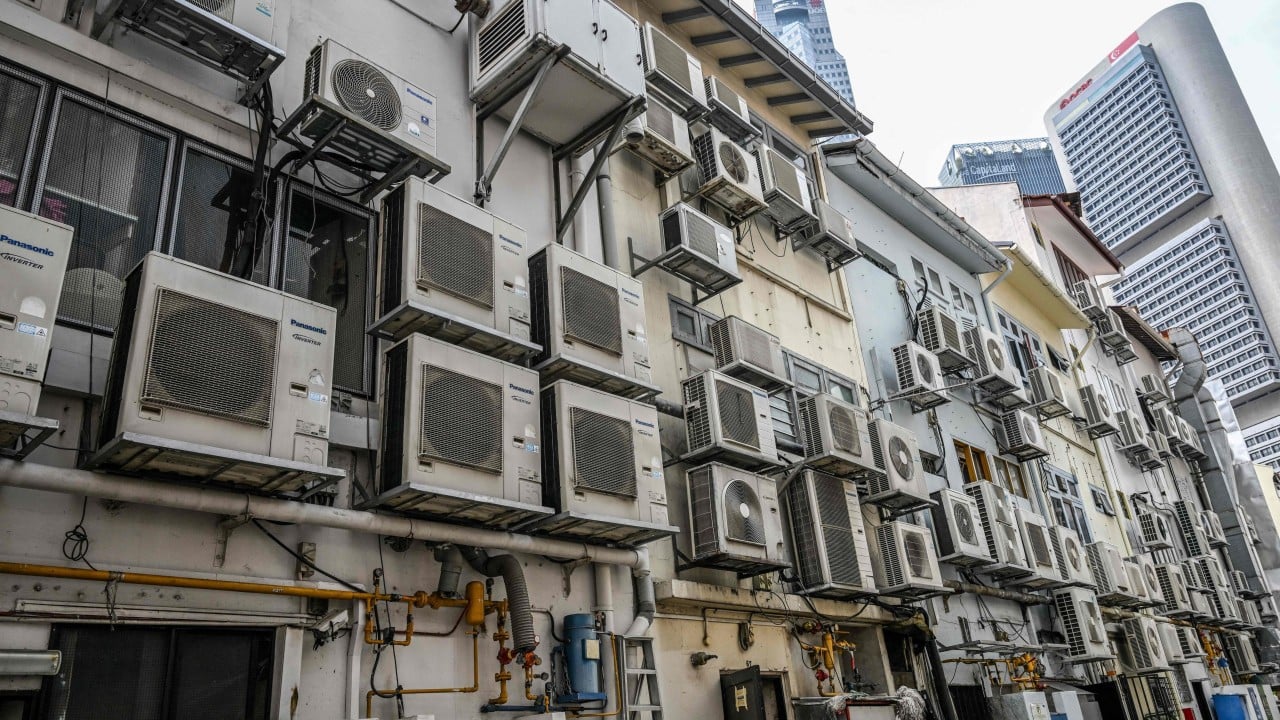
Singapore turns up heat on power-hungry air conditioning with cool revolution
Long dubbed an “air-conditioned nation”, Singapore is experimenting with cooling alternatives from chilled beams to “passive displacement” to curb its thirst for energy-guzzling air conditioning. The city state has the highest per-capita air conditioner ownership rate in Southeast Asia, with about 99 per cent of private residences equipped with cooling units. Singapore’s local building sector accounts for one-fifth of its emissions, while cooling itself accounts for 40 to 60 per cent of a...

Hate paper straws? Asia’s new alternatives are another eco trap
For Singaporean flight attendant Chloe Tan Zi Ling, 35, the problem with paper straws is their impracticality. “It softens before we can finish the drink, so we have to gulp it down without a straw,” she said, adding that reusable metal alternatives left an unpleasant taste in her mouth. Her frustration reflects a wider debate over Asia’s shift away from plastic straws, with a recently released South Korean study finding that conventional plastic straws performed better than paper and other...

He’s the Top Snake Catcher, and Business Is Booming. There’s Just One Problem.
Bangkok’s firefighters do more snake catching than firefighting, and Pinyo Pukpinyo trains them. But he refuses to kill the snakes, and he’s running out of containers.

Thailand’s Most Famous Snake Catcher
Pinyo Pukpinyo, Thailand’s most famous snake catcher, has found the critters slithering in nooks and crannies all over Bangkok. He refuses to kill them.

Korean Language Picks Up in Japan
The rise of Korean terms in Japanese is a striking reversal from colonial times and a sign of the global appeal of South Korean culture.

Far from home, close to grief: why millions of Filipino migrants dread Undas
For over three decades, Dolores Balladares Pelaez has lived and worked in Hong Kong without once returning to the Philippines for Undas, the annual two-day observance honouring the dead. This year, she is arranging prayers from afar for her late father and four siblings, but will once again miss the gathering back home. On Thursday morning, the 56-year-old domestic helper called her mother and niece in Laguna province to discuss hiring a prayer leader to visit the family home. Her sisters-in-law...

South Korea’s latest chart sensation has a secret: the singer isn’t human
A little-known South Korean music act has climbed the charts with a viral hit that has caught listeners off guard – not just for its sudden popularity, but because its vocals were generated entirely by artificial intelligence. Meomuru’s single, “Have You Become the Adult You Dreamed Of?”, climbed to No 2 on Melon’s Top 100 – South Korea’s flagship streaming chart – earlier this week. The track’s popularity has turned Meomuru into one of the country’s most-talked-about acts. The song was created...

Southeast Asia’s EV boom sidelines local car parts suppliers
Southeast Asia’s electric vehicle boom risks leaving the region’s smaller companies behind, as Chinese automotive giants bypass local part-makers in favour of imported components and locked-in supplier networks. Local manufacturers across Indonesia, Thailand and Malaysia are facing a double squeeze: demand is weakening for parts used in petrol and diesel cars, collectively known as internal combustion engine (ICE) vehicles, while steep barriers to entry also keep them out of EV supply...

FBI blames North Korea for stolen billions from Binance in biggest hack in history
The theft of billions of dollars from Binance within a matter of minutes, the biggest cryptocurrency heist in history, was orchestrated by North Korean hackers, the FBI said on Saturday. The Federal Bureau of Investigation said in a statement that this week’s attack was tied to “malicious cyber activity” by an entity known as TraderTraitor, the same actors behind a US$1.5 billion Bybit hack last year. The FBI asked cryptocurrency exchanges, blockchain analytics companies and others to block...

North Korean Hackers Stole Billions, the F.B.I. Says. It’s Not Their First Heist.
This week’s $6.3 billion hack of Binance is the largest to hit crypto, and would be the most that North Koreans have stolen in years of brazen cybercrime.
YOUR NEWS, OUR NETWORK.
Do you have Great News you want to tell the world?
Be it updates about your business or your community, you can make sure that it’s heard by submitting your story to our network reaching hundreds of news sites across 6 verticals.